

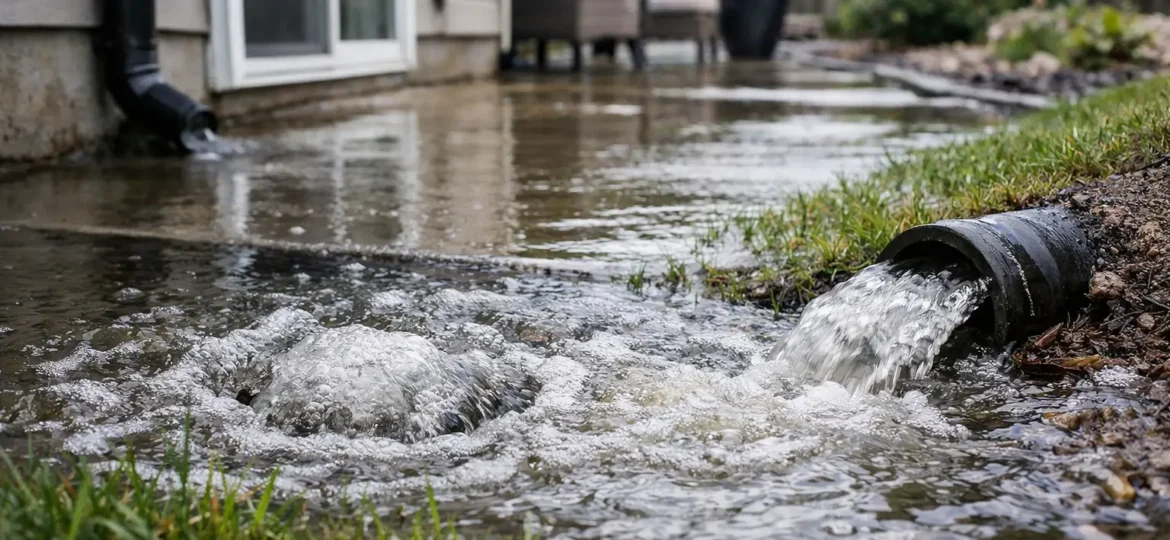
A wet spot near a drain, septic tank, cleanout, or low area in the yard is not always just rainwater. If you are asking, why is water backing up outside, the answer may be a clogged sewer line, a full septic tank, a failed drain field, or drainage that has nowhere to go. The biggest mistake is waiting until wastewater reaches the house.
Clear water after a hard storm may be a yard-drain issue. Murky, foul-smelling water, toilet paper, or slow drains inside the building point to a wastewater problem that needs attention fast. Keep people and pets away from the area, limit water use, and get the system checked before the backup becomes a cleanup job.
Why Is Water Backing Up Outside? Start With the Location
Where the water appears gives a good first clue. Water coming up around a sewer cleanout, usually a capped pipe near the home or building, often means the main sewer line is blocked downstream. When you flush, run the dishwasher, or drain a bathtub, the wastewater cannot continue toward the municipal sewer or septic system. It takes the easiest path out – often the cleanout or a low point outside.
Water pooling over the septic tank or drain field can mean the tank is overdue for pumping, the outlet filter is clogged, or the drain field is saturated or failing. A septic system is designed to send treated liquid into surrounding soil. When that soil cannot accept more water, wastewater can rise to the surface.
A backup near a driveway drain, catch basin, gutter downspout, or yard drain may have a different cause. Leaves, mud, roots, landscaping fabric, and broken pipe can stop stormwater from moving away. In Chattanooga-area clay soils and low-lying yards, heavy rain can make a small drainage problem look much worse in a hurry.
The Most Common Causes of Water Backing Up Outside
A clogged main sewer line
Main line blockages are a common reason for wastewater to escape outdoors. Grease, wipes, paper products, root growth, collapsed pipe, and years of buildup can restrict the line until it closes completely. Older properties may also have cracked clay, cast-iron, or Orangeburg pipe that has shifted or deteriorated underground.
This type of problem often comes with warning signs indoors: toilets bubbling, tubs draining slowly, sewage odors, or water rising in a shower when another fixture runs. If several drains are acting up at once, treat it as a main line issue rather than a simple sink clog.
A full or overloaded septic tank
A septic tank holds solids while liquid effluent moves into the drain field. Over time, sludge and floating scum build up. Without regular pumping, those solids can move toward the outlet, clog components, and overload the rest of the system.
Tank capacity, household size, water use, and the system’s condition all matter. A family that has added occupants, laundry loads, or a finished basement may outgrow the way an older septic system was being used. Pumping can solve the problem when the tank is simply full, but it will not repair a damaged drain field or broken sewer pipe. That diagnosis matters.
A saturated or failing drain field
When water backs up outside over a septic drain field, the soil may be saturated from rain, poor drainage, groundwater, or a system failure. Heavy vehicles driving over the field can crush pipes and compact the soil. Tree roots can interfere with lines. Age, poor installation, or too much wastewater can also reduce the field’s ability to absorb effluent.
A wet, spongy, unusually green strip of grass near the drain field is not a sign that the system is healthy. If sewage odor is present, or gray water is surfacing, stop using as much water as possible. Do not park there, mow through standing wastewater, or try to cover it with dirt.
A blocked or damaged yard drain
Not every outdoor backup involves sewage. Yard drains are built to collect rainwater and move it away from the home, parking area, or building entrance. They can clog at the grate, in the pipe, or where the discharge line ends.
If the water is clear and only appears during rain, inspect visible grates for leaves and debris. Still, do not assume the issue is minor if water is flowing toward the foundation, garage, crawl space, or basement. A camera inspection can identify buried pipe damage, root intrusion, separated fittings, or an outlet that has been buried or blocked.
A failed pump or check valve
Some homes and commercial properties rely on sump pumps, sewage ejector pumps, or grinder pumps. If a pump loses power, burns out, becomes jammed, or has a bad float switch, wastewater or groundwater may back up at an outside basin or low area.
A failed check valve can also allow pumped water to run backward into the pit after each cycle. This is one reason a system may seem to work intermittently before it fails completely. Pump problems are not a wait-and-see repair, especially where toilets, lower-level plumbing, or a commercial restroom depend on that equipment.
What to Do Right Away
The right response depends on whether the water is stormwater or sewage, but the safe first steps are similar. Reduce the amount of water entering the system. Avoid flushing toilets, running washing machines, taking showers, or using dishwashers until you know what is backing up.
If the water smells like sewage, contains solids, or has an oily gray appearance, keep children, pets, and customers away. Wastewater can carry harmful bacteria. Do not attempt to open a septic tank, enter a pit, or handle contaminated material without proper equipment.
For a suspected sewer-line clog, do not keep plunging fixtures or pouring harsh chemical drain cleaners into the system. Chemical products rarely clear a main-line blockage and can make the work more dangerous for the technician who has to open the line later. A professional drain cleaning machine, hydro jetting, and camera inspection are usually the right tools depending on the pipe and the blockage.
For a suspected septic issue, avoid adding septic additives or pumping water out of the yard. Additives do not repair a clogged outlet, full tank, broken baffle, or failed drain field. The system needs to be inspected, then pumped, repaired, or evaluated based on what is actually happening underground.
When It Is an Emergency
Call for immediate help when sewage is actively surfacing, backing up into tubs or toilets, entering a building, or threatening a well, creek, drainage ditch, or neighboring property. The same goes for a commercial property where wastewater could affect employees, customers, or operations.
A backup that stops after a few minutes is still a warning. Partial blockages tend to return at the worst possible time – after a busy morning, a holiday gathering, or a heavy rain. Early service is usually cleaner, less disruptive, and less expensive than waiting for a complete overflow.
How a Professional Finds the Real Problem
A proper diagnosis should match the symptom, not guess at it. For a sewer problem, a technician may access the cleanout, clear the line, and run a camera through the pipe to look for roots, breaks, bellies, or heavy buildup. Clearing the clog restores flow, while the camera explains why it happened and whether the line needs repair.
For septic backups, the tank level, inlet and outlet condition, filter, baffles, pump components, and drain field symptoms should all be evaluated. Pumping may be the first necessary step, but the technician should also determine whether the system is receiving too much water, has a blocked component, or needs septic repair or drain field work.
Chatta-Rooter Plumbing handles both sides of the problem – sewer and drain issues as well as septic pumping, repair, and drain field concerns. That matters when the water outside does not make the cause obvious.
Preventing the Next Outdoor Backup
Keep wipes, grease, coffee grounds, feminine products, and other non-flushable materials out of drains and toilets. Schedule septic pumping on a routine that fits your household and tank size rather than waiting for odors or wet ground. Keep vehicles, sheds, and deep-rooted trees away from septic tanks and drain fields.
For yard drainage, clear visible grates before major storms and make sure downspouts discharge away from the foundation. If the same area floods repeatedly, the buried drain line may need cleaning, repair, or a better discharge route.
Standing water outside is your property telling you something is wrong. Acting early protects your home, yard, plumbing system, and budget – and keeps a small backup from turning into a serious wastewater emergency.