

A sink that takes forever to empty is not just annoying. It is your plumbing system warning you that a clog is building, and if you wait too long, that slow drain can turn into a full backup at the worst possible time. If you are wondering how to clear a slow drain without making the problem worse, the right move is to start simple, work safely, and know when the clog is no longer a basic DIY job.
How to clear a slow drain without damaging your pipes
The first thing to understand is that a slow drain is a symptom, not the actual problem. In a bathroom sink, the blockage is usually hair, soap film, toothpaste residue, and grime sitting near the stopper or trap. In a kitchen sink, grease, food scraps, and soap buildup are usually the main culprits. In tubs and showers, it is almost always hair and soap scum working together.
That matters because the best fix depends on what is causing the restriction and where it is sitting in the line. A light clog near the opening can often be cleared with basic tools. A deeper blockage in the branch line or main line takes more than a bottle from the hardware store.
Start by clearing out any standing water so you can work. Put on gloves. If the drain has a stopper, remove it and inspect what is attached underneath. A lot of slow drains are caused by buildup wrapped around the stopper assembly, and that material is easier to remove by hand than by pushing it farther down.
Once the stopper is out, use a plastic drain tool or a small drain zip tool to pull out hair and debris. It is not a glamorous job, but it works. If you pull out a wad of gunk and the drain starts moving again, run hot water for a minute or two and see if flow improves.
Hot water helps with soap residue and light grease, but there is a limit. Boiling water can be too aggressive for some pipes, especially older PVC joints, so very hot tap water is the safer choice in most homes. If you are dealing with a kitchen sink and suspect grease, hot water followed by a small amount of dish soap can help loosen buildup near the top of the line.
Try a plunger before chemical drain cleaners
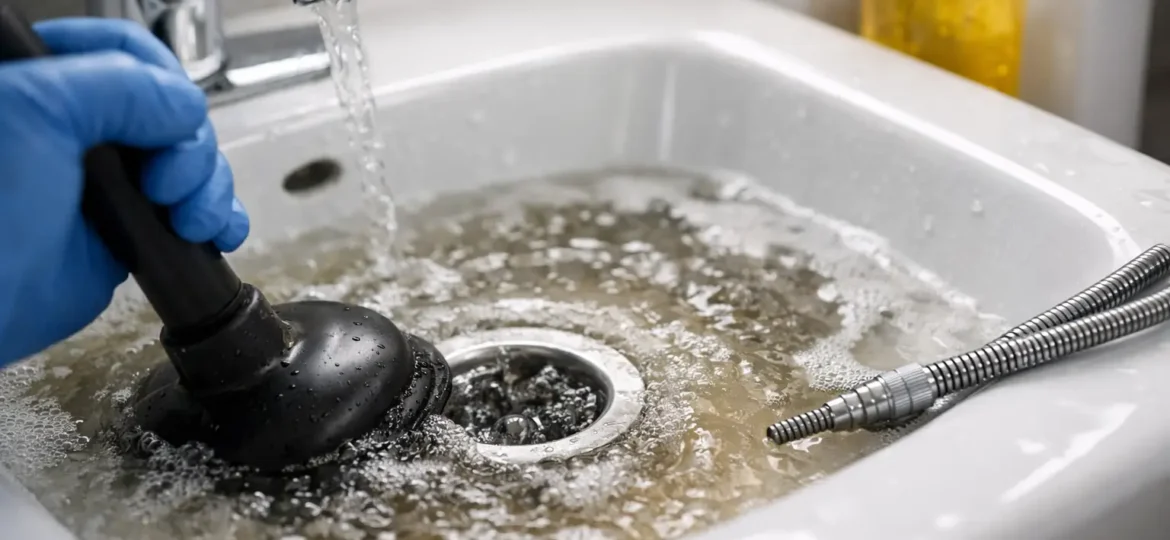
A sink or tub plunger can do more than most people think, especially when the clog is not fully solid yet. For a sink, cover the overflow opening with a wet rag so you can build pressure. Add enough water to cover the plunger cup, then give it several firm pumps.
If the drain starts gurgling and the water level drops, you are making progress. Flush with hot water and test again. Sometimes a partial clog breaks loose in stages, so one round of plunging may not finish the job.
What you do not want to do is reach for harsh chemical drain cleaners right away. They are heavily marketed, but they are not always effective on thick hair clogs or heavy grease. Worse, they can sit in the trap and create a nasty, dangerous mess if you end up having to take the pipe apart later. They can also be hard on older plumbing and septic systems.
For homes on septic, this matters even more. Dumping aggressive chemicals into your plumbing is not the smart long-term move. A mechanical cleaning method is usually safer and more effective.
Use a hand snake if the clog is deeper
If the drain is still slow after removing visible debris and plunging, the clog may be sitting farther down. That is where a hand snake or small drain auger comes in.
Feed the cable into the drain slowly. When you hit resistance, tighten the lock and rotate the handle while applying gentle forward pressure. The goal is to break through the clog or hook it so you can pull it back out. Do not force it. If the snake binds up hard, cranking harder can damage the tool or scratch the pipe.
A hand snake works well for bathroom sinks, tubs, and some shower drains. It can also help with kitchen lines, but grease clogs are often stubborn. You may punch a hole through the blockage and get temporary drainage, only to have the line slow down again because the pipe walls are still coated.
That is one reason recurring slow drains should not be ignored. If the problem keeps coming back, the clog may be farther down the line or the pipe may need a more complete cleaning.
When a slow drain points to a bigger plumbing problem
Sometimes the issue is not one fixture. If your kitchen sink is slow and the dishwasher backs up into it, that suggests a shared line problem. If more than one drain in the house is slow, or if you hear gurgling from nearby fixtures, you may be dealing with a branch line blockage or a sewer line issue.
Pay attention to warning signs. A toilet that bubbles when the shower drains, water backing up in a tub when the washing machine runs, or repeated clogs in multiple fixtures are not small problems. Those are signs the blockage may be deeper in the system.
This is where DIY can stop making sense. A main line problem usually needs professional equipment, and guessing wrong can waste time while the problem gets worse. In some cases, especially with older lines, root intrusion, pipe damage, or heavy sludge buildup can be the real cause. A basic hand snake will not solve that.
How to clear a slow drain in the kitchen vs. bathroom
Not all drains need the same approach. In a bathroom sink or tub, the clog is usually soft and stringy, so removing hair manually and using a small snake is often enough. In a kitchen sink, grease is the usual enemy, and grease does not always come out in one piece.
If your kitchen sink has a garbage disposal, make sure the disposal is off before you do anything. Check for obvious obstructions and make sure the reset has not tripped if the disposal is not working properly. A slow kitchen drain with a working disposal usually points to buildup in the drain line rather than a problem with the unit itself.
For bathroom drains, take a close look at the stopper assembly. A surprising amount of hair gets trapped there, and you can spend half an hour trying other methods when the clog is sitting right under the cap.
For showers and tubs, remove the cover plate if needed and use a drain tool first. Hair clogs near the top are common and usually easier to pull out than push through.
What not to do when clearing a slow drain
A lot of plumbing damage starts with good intentions. Mixing drain chemicals is dangerous. Using too much force with a snake can crack old fittings. Pouring grease-cutting products into a line may seem helpful, but if the clog is already heavy, that liquid can sit there and do very little.
Store-bought acid cleaners are especially risky. They can burn skin, damage pipes, and create a problem for whoever has to open the line next. If you have already used chemicals and the drain is still slow, tell the plumber before any work starts.
Also, do not assume every slow drain is a simple clog. If foul odors, sewage smells, or recurring backups are part of the picture, the issue may be tied to the sewer or septic side of the system. That is not something to experiment with.
When it is time to call a pro
If you have tried basic cleaning, plunging, and a hand snake and the drain is still slow, it is time to stop throwing time at it. The same goes for repeated clogs, multiple slow fixtures, or any sign of sewage backup. Professional drain cleaning gets to the actual cause instead of just punching a temporary hole in the blockage.
In tougher cases, a plumber may recommend a camera inspection to see what is happening inside the line. That can reveal grease buildup, root intrusion, sagging pipe, scale, or other issues you cannot diagnose from the drain opening. If the line needs a full cleaning, hydro jetting may be the better answer than repeated snaking.
That is especially true for commercial properties, older homes, and any building with a history of drain problems. A quick fix feels cheaper until the same line backs up again.
For homeowners and property owners in the Chattanooga area, this is where calling an experienced local company matters. Chatta-Rooter Plumbing handles everything from simple drain cleaning to main line problems, septic issues, and emergency backups, with upfront pricing and real field experience behind the work.
A slow drain is one of those problems that starts small and gets expensive when it is ignored. If you can clear it safely, great. If the signs point to something deeper, getting it handled early is the fastest way to protect your plumbing and your peace of mind.