

A failing septic system usually does not start with a dramatic collapse. It starts with a wet patch that never dries, a toilet that gurgles, or drains that get slower every month. When that happens, homeowners start searching for drain field replacement options because they know the problem is bigger than a simple clog.
The hard truth is this: not every bad drain field needs the same fix. Some systems can be repaired in sections. Some need a full replacement. Some properties need a different layout entirely because soil, space, age, or code requirements have changed. If you pick the wrong approach, you can spend real money and still end up with sewage backing up into the house.
When drain field replacement options come into play
Your drain field is where wastewater leaves the septic tank and moves into the soil for final treatment. Once that area stops absorbing water the way it should, the whole system starts to struggle. The septic tank can still be pumped, but pumping alone will not cure a drain field that is failing.
Common warning signs include standing water over the field, strong sewage odors outside, soggy grass, slow drains throughout the building, and backups in the lowest fixtures. In some cases, the issue is caused by years of grease, solids, or sludge reaching the field. In others, the field is simply worn out, crushed, undersized, or installed in poor soil.
This is where a real diagnosis matters. A drain field can fail because of hydraulic overload, root intrusion, compacted soil, broken distribution lines, or a septic tank problem upstream. If the tank is cracked, the baffle is missing, or the line feeding the field is blocked, replacing the whole field before checking those pieces can be a costly mistake.
The main drain field replacement options
There is no single best answer for every property. The right fix depends on available land, soil conditions, local code, water usage, and the condition of the rest of the septic system.
Partial drain field replacement
If only one section of the field has failed and the remaining lines are in solid condition, a partial replacement may be possible. This usually means removing and replacing damaged trenches, pipe, gravel, or chambers in the affected area while keeping part of the original layout in service.
The upside is cost. Partial replacement is usually less expensive than tearing out and rebuilding the whole field. The downside is that it only makes sense when the failure is clearly limited. If the entire field is near the end of its life, a partial repair can turn into a short-term patch.
Full drain field replacement
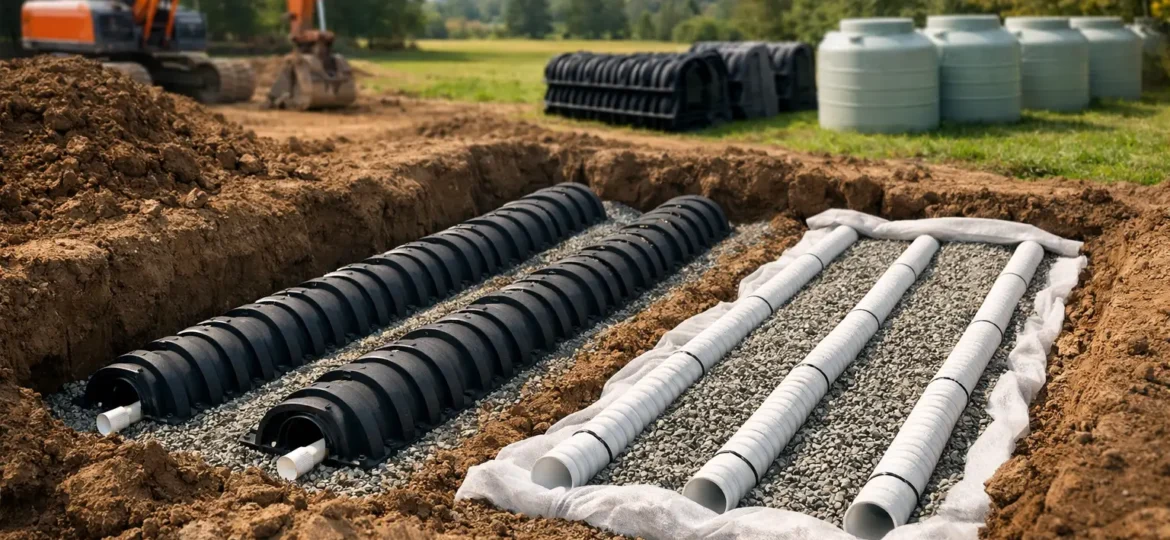
A full replacement is often the right move when the field is old, badly saturated, collapsed, or no longer meets the property’s wastewater demand. This involves abandoning or removing the old field and installing a new one based on current site conditions and code requirements.
This option costs more up front, but it often gives the most dependable long-term result. It also gives the installer a chance to correct problems with layout, sizing, slope, and distribution that may have contributed to the original failure.
New field in a different location
Sometimes the old field location is the problem. Soil may be too compacted, the water table may be too high, or the lot may drain poorly after years of use. In that case, one of the better drain field replacement options is moving the field to a new approved area on the property.
This can be a smart choice when the site allows it. It gives the old area a break and may place the new field in better soil. The trade-off is that it may require more excavation, more pipe, and a different design. On smaller lots, this option may not be available at all.
Chamber system replacement
Older gravel-and-pipe fields are not the only style in use. Some replacements are done with chamber systems, which are plastic units that create open space for effluent to disperse into the soil.
Chamber systems can reduce the need for gravel and may speed up installation in some cases. They can work well on the right site, but they are not a shortcut around bad soil or poor design. If the lot has severe drainage limitations, changing materials alone will not fix the underlying issue.
Mound or alternative septic system
When native soil is too shallow, too tight, or too wet for a conventional drain field, an alternative system may be required. A mound system is one example. It raises the absorption area above natural grade using engineered fill and controlled dosing.
These systems can solve site limitations, but they are more complex and usually more expensive to install and maintain. They may require pumps, alarms, and more careful water usage. For some properties, though, this is the only code-compliant way to replace a failed field.
What affects the right replacement choice
The biggest factor is soil. A property can have plenty of open land and still be a poor candidate for a standard field if the soil will not absorb water properly. That is why soil testing and site evaluation matter before any serious septic work begins.
The next factor is space. Setbacks from wells, structures, property lines, and water features can limit where a field can go. On commercial sites or rental properties, wastewater volume may also push the design toward a larger or alternative system.
System age matters too. If the drain field is failing but the septic tank is also undersized, damaged, or in bad shape, replacing the field alone may not be enough. In many cases, the best value comes from looking at the entire system as one package instead of treating each problem separately.
What drain field replacement usually costs
Cost is one of the first questions people ask, and fair enough. Septic work is not something most property owners budget for until there is a problem. The exact price depends on permits, excavation depth, soil conditions, accessibility, field size, materials, and whether pumps or advanced components are needed.
A partial field repair will usually cost less than a full conventional replacement. A full replacement in good soil with clear access is one thing. A new system on a tight lot with poor soil, tree removal, pumping equipment, or an alternative design is another.
That is why flat guesses over the phone are risky. A real estimate should come after someone evaluates the site, the tank, the lines, and the reason the original field failed. Otherwise, you are just pricing a hole in the ground, not the actual solution.
Can a drain field be saved instead of replaced?
Sometimes, yes. Sometimes, no. That is the honest answer.
If the problem is an overloaded tank, a distribution box issue, or a line blockage before the field, repairs may restore normal function without field replacement. If damage is limited and caught early, a targeted repair may buy years of life.
But if the soil in the field area is biomatted, saturated, and no longer accepting wastewater, miracle fixes are usually a waste of money. Additives, internet cures, and wait-and-see approaches do not solve a field that is truly spent. They just delay the repair while the mess gets worse.
How to make the smart call
If you are weighing drain field replacement options, the smartest move is not guessing based on symptoms alone. Get the system inspected by a company that actually handles septic diagnostics, repairs, and replacement work in the field, not just tank pumping. You want someone who can tell the difference between a clogged line, a failing tank component, and a dead drain field.
Ask direct questions. Is the failure partial or system-wide? Can the existing field be repaired? Does the tank also need work? Is there enough usable land for a new conventional field, or will an alternative system be required? How will water use in the home or building affect the design?
For homeowners and property managers in this region, that local experience matters. Soil, slope, rainfall, and permitting are not the same everywhere, and a contractor who works these problems every week will usually spot issues faster and price them more accurately. That is one reason companies like Chatta-Rooter focus so heavily on septic work instead of treating it like a side service.
A bad drain field will not heal on its own. The good news is that there are workable options, and the right one can give you years of dependable service. The key is acting before a wet spot turns into a full backup and choosing a fix that matches the property instead of forcing a one-size-fits-all answer.