

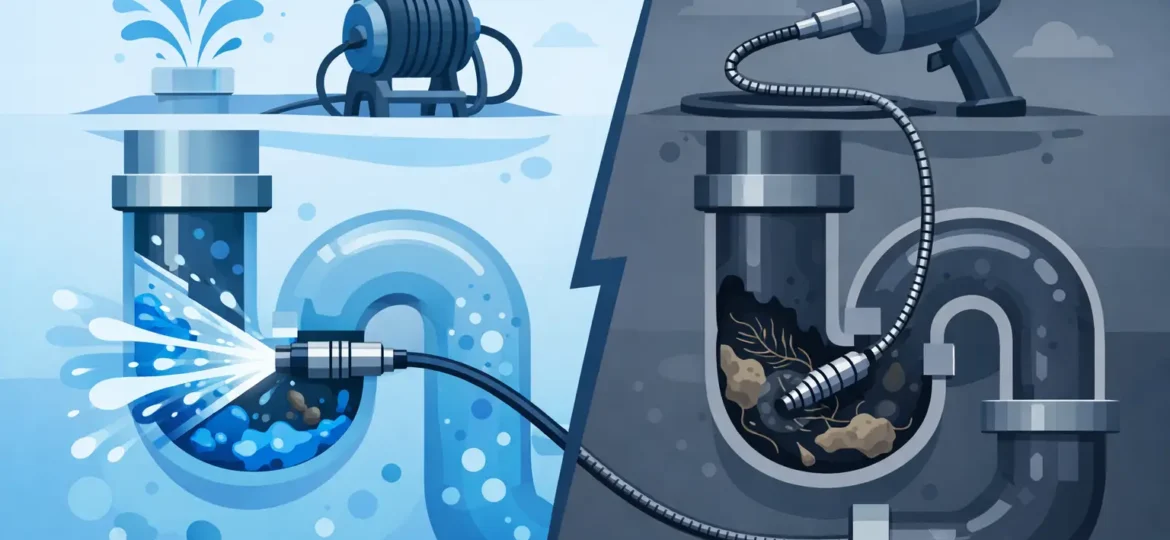
A drain that keeps backing up is not the time for guesswork. When people compare hydro jetting vs snaking drains, what they really want to know is simple: which one will fix the problem without wasting money or buying a few days before the clog comes right back.
The honest answer is that both methods have a place. A drain snake is often the fastest way to punch through a blockage and get water moving again. Hydro jetting is the stronger cleaning method when buildup is heavy, grease is thick, or roots and sludge are causing repeated trouble. The right choice depends on what is inside the line, how bad the blockage is, and the condition of the pipe itself.
Hydro Jetting vs Snaking Drains: The Main Difference
Snaking breaks through a clog. Hydro jetting cleans the pipe wall.
That is the biggest difference, and it matters more than most property owners realize. If your line has a single soft blockage from toilet paper or a localized jam of debris, snaking may be enough. If your drains are slow because years of grease, soap scum, sludge, or scale have narrowed the line, a snake may open a small path but leave most of the mess behind.
Hydro jetting uses high-pressure water to scour the inside of the pipe. Instead of drilling a hole through the clog, it washes buildup off the pipe walls and pushes debris out of the system. That is why hydro jetting is often the better long-term answer for repeat drain problems.
How Drain Snaking Works
A drain snake, sometimes called an auger, is a cable fed into the drain or sewer line to break apart or pull out a blockage. It is a proven tool and still one of the first solutions plumbers use for many clogs.
For a simple stoppage, snaking is practical and efficient. A technician can often clear a toilet clog, branch line blockage, or minor main line obstruction without a major setup. It is especially useful when the goal is to restore flow quickly during an active backup.
But snaking has limits. It does not fully scrub pipe walls. In grease-heavy kitchen lines or older sewer lines with layered sludge, the cable may cut a narrow tunnel through the blockage while leaving a thick ring of buildup behind. Water starts moving again, but the pipe is still dirty and more likely to clog again soon.
How Hydro Jetting Works
Hydro jetting sends highly pressurized water through the line using a specialized hose and nozzle. The water blasts forward to break up blockage and sprays backward to clean the walls of the pipe and flush debris downstream.
This method is strong enough to remove grease, soap residue, mineral scale, and even many root intrusions. For commercial kitchens, apartment buildings, and homes with recurring main line problems, that full-pipe cleaning is often the real advantage.
Hydro jetting is not just about force. It is about coverage. A snake touches part of the clog. A jetter cleans the interior circumference of the line. When the line can handle it, that makes a big difference in how long the fix lasts.
When Snaking Is the Better Choice
There are plenty of cases where snaking makes more sense than hydro jetting. If the clog is isolated, recent, and not caused by heavy buildup, snaking is usually the faster and more cost-effective move. A backed-up toilet, a shower drain with hair, or a sink line with a localized obstruction often responds well to an auger.
Snaking can also be the safer first step in some older or questionable pipes. If a line is cracked, offset, badly corroded, or made from fragile material, a plumber may want to inspect it before recommending hydro jetting. High pressure is a great cleaning tool, but not every damaged line is a good candidate.
For emergency service, snaking is often the quickest way to get things under control. If sewage is standing in a home or business, restoring basic flow may come first. After that, a camera inspection or follow-up cleaning can determine whether a deeper problem is still sitting in the line.
Snaking is usually best for:
- Simple clogs
- Hair or paper blockages
- Fast emergency relief
- Lines that may not be suitable for high-pressure cleaning
When Hydro Jetting Is the Better Choice
If the same drain keeps clogging, hydro jetting starts to make a lot more sense. Repeat problems usually mean the issue is not just one blockage. It is buildup along the inside of the pipe, root intrusion, or debris that was never fully removed.
Kitchen lines are a common example. Grease does not just sit in one spot. It coats the pipe over time, catches food particles, and gradually tightens the passage water has to move through. A snake may poke through that mess. Hydro jetting actually strips it down.
Main sewer lines are another case where jetting can be the better long-term fix. If roots, sludge, and scale are reducing flow, thorough cleaning matters. For commercial properties, where drain usage is heavier and downtime costs more, hydro jetting can save a lot of repeat service calls.
Hydro jetting is often best for:
- Recurring drain clogs
- Grease-heavy kitchen lines
- Sludge and scale buildup
- Root intrusion in sewer lines
- Preventive maintenance for high-use systems
Hydro Jetting vs Snaking Drains: Cost vs Value
A lot of people start with price, and that makes sense. Snaking usually costs less upfront. It is often faster, requires less setup, and solves many common clogs just fine.
Hydro jetting generally costs more because it is a more intensive service. It also usually requires a trained technician to assess the line and, in many cases, inspect it first. But lower upfront cost does not always mean better value.
If a line needs to be snaked three times in six months, the cheaper option stops being cheaper. For recurring blockages, hydro jetting may cost more on day one and still save money over time because it removes the source of the problem more completely.
That is why the right question is not just what costs less today. It is what actually solves the problem.
What About Older or Damaged Pipes?
This is where experience matters. Hydro jetting is powerful, but it is not something to use blindly on every system. If a sewer line is already compromised by cracks, bad joints, severe corrosion, or collapse, the pipe needs to be evaluated first.
A professional plumber may recommend a camera inspection before hydro jetting, especially on older properties. That inspection shows whether the line is solid enough for high-pressure cleaning and whether the clog is caused by buildup, roots, or structural damage.
If the real issue is a broken pipe, neither snaking nor hydro jetting is the full answer. Cleaning may restore temporary flow, but repair is what fixes the problem for good.
Which Method Lasts Longer?
In many cases, hydro jetting lasts longer because it does more than reopen the line. It removes the residue that helps future clogs form.
Snaking can absolutely solve the immediate issue, and for some blockages that is all you need. But if the pipe walls are still coated with grease, soap, wipes residue, or sludge, the next clog has an easy place to start. That is why some drains seem to work for a few weeks and then back up again.
A clean pipe gives wastewater less to catch on. That is the reason hydro jetting tends to offer a longer-lasting result in problem lines.
The Best Choice Depends on the Real Problem
There is no one-size-fits-all answer in hydro jetting vs snaking drains. A simple branch line clog and a grease-packed main line are two very different jobs. A homeowner with one slow tub drain does not need the same solution as a restaurant dealing with repeated sewer backups.
What matters is getting the line diagnosed correctly the first time. That means looking at the symptoms, the history of the blockage, the type of pipe, and whether this is a one-time issue or part of a bigger pattern. A good plumber will not push the biggest service every time. They will recommend the method that fits the pipe and the problem.
At Chatta-Rooter Plumbing, that is how tough drain jobs should be handled – straight answers, fair pricing, and the right equipment for the line in front of you.
If your drains are slow, backing up, or clogging over and over, the smartest next step is not guessing between tools. It is having the line checked by someone who knows when a quick snake will do the job and when a full hydro jetting service is the fix that actually sticks.