
A slow toilet, a tub that gurgles, and a floor drain that starts smelling bad usually point to one problem – your sewer main line is not moving waste the way it should. When people search for main line cleaning Chattanooga service, they are usually not planning ahead. They are dealing with a mess that is already starting to affect the whole house or building.
This is not the kind of clog you fix with a bottle from the hardware store and hope for the best. A main line problem can shut down multiple drains at once, send sewage back into the lowest fixtures, and turn a small issue into cleanup, repair, and real property damage fast. If you know what to watch for, you can catch it sooner and avoid a worse bill later.
What main line cleaning in Chattanooga actually means
Your main sewer line is the pipe that carries wastewater from the plumbing inside your home or building out to the city sewer or septic system. Every toilet flush, shower drain, sink drain, and laundry discharge depends on that line staying open.
Main line cleaning removes grease buildup, sludge, wipes, roots, scale, and other blockages that reduce flow or stop it completely. In some cases, the line just needs a professional clearing. In other cases, cleaning is the first step that reveals a bigger problem like a belly in the pipe, a collapse, root intrusion, or damage at a connection point.
That is why real diagnosis matters. A good main line cleaning job is not just about punching a hole through a clog. It is about restoring flow and figuring out why the blockage happened in the first place.
Signs you may need main line cleaning Chattanooga service
A branch drain clog usually affects one fixture. A main line clog tends to affect several. That is the first thing to remember.
If you flush a toilet and water backs up in the shower, that is a red flag. If the washing machine drains and the floor drain starts filling, that is another. Gurgling sounds from multiple drains, sewage smells around lower-level fixtures, and recurring clogs that keep coming back after basic snaking all point to a main line issue.
The most urgent sign is sewage backing up into the lowest point in the property, often a basement shower, utility drain, or lower bathroom. At that point, you are beyond a nuisance. You are looking at a sanitation problem and possible damage to flooring, drywall, trim, and contents.
For commercial properties, the signs may show up as slow restroom drains, repeated toilet overflows, bad odors near drains, or wastewater trouble during busy hours. Restaurants, offices, rental properties, and multi-unit buildings can all feel the impact quickly when the main line starts failing.
Why sewer lines clog in Chattanooga
Some causes are simple. Others are not.
Grease is one of the biggest offenders, especially in kitchens. It may go down hot, but it cools and sticks inside the line. Over time, it catches food particles and other debris until flow is restricted. Paper products and so-called flushable wipes create another common blockage. They do not break down the way people expect, and they can build a stubborn mass in the pipe.
Older properties in Chattanooga may also deal with root intrusion. Tree roots seek moisture and can enter small pipe joints or cracks. Once inside, they trap debris and keep growing. Cast iron lines can develop scale and corrosion that narrow the inside diameter of the pipe. Orangeburg and older sewer materials may soften, deform, or fail altogether.
Then there is the issue of slope. A line with poor pitch or a belly can hold water and solids instead of carrying them out. In those cases, cleaning may restore flow for now, but it will not change the underlying defect. That is where a camera inspection becomes useful.
Why store-bought drain cleaners are the wrong move
If one bathroom sink is sluggish, people often reach for a quick fix. But when the problem is in the main line, chemical cleaners rarely solve anything. Most do not even reach the actual blockage effectively, especially if standing water is involved.
Worse, those products can damage pipes, create hazards for anyone opening the line later, and give a false sense of progress while the real problem keeps building. The clog may seem better for a day or two and then come back harder.
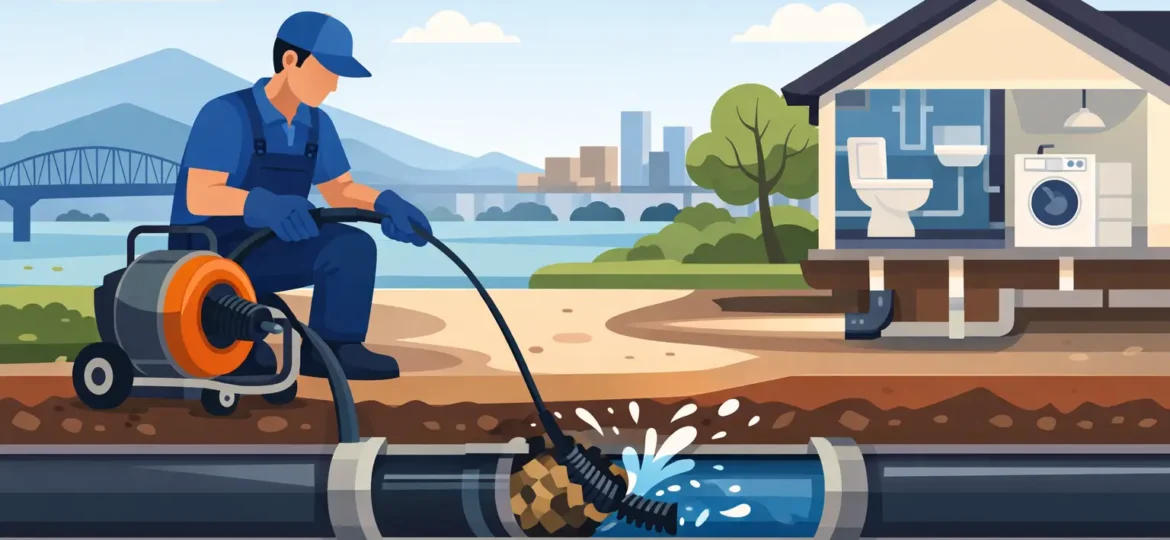
A sewer main line needs mechanical cleaning, hydro jetting, or both, depending on the material of the pipe and the type of blockage. It needs the right equipment and a technician who knows the difference between a temporary opening and a real fix.
The best way to handle main line cleaning Chattanooga problems
The right method depends on what is in the pipe and what shape the pipe is in.
Snaking and cabling
A drain cable can break through many common stoppages and restore basic flow. This is often a good first step when the blockage is localized and the pipe itself is still in decent condition. It is fast and effective for many paper, sludge, and minor root problems.
But cabling has limits. It may punch a path through the blockage without fully cleaning the pipe walls. That means buildup can remain behind and the same problem can return sooner than you want.
Hydro jetting
Hydro jetting uses high-pressure water to scour the inside of the pipe. It is especially effective for grease, sludge, scale, and root remnants. When done correctly, it cleans the full diameter of the line far better than a basic cable alone.
That said, hydro jetting is not right for every pipe. If the line is fragile, collapsed, or badly deteriorated, pressure cleaning may not be the first move. That is why experienced plumbers inspect, test, and choose the right method instead of guessing.
Camera inspection
A sewer camera inspection shows what is actually happening underground. If a line keeps clogging, if roots are suspected, or if a property has older piping, a camera can confirm whether you are dealing with buildup, cracks, offset joints, bellies, or a break.
This matters because cleaning and repair are not the same service. Cleaning solves stoppages. Repair solves damaged infrastructure. You want to know which one you need before spending money twice.
Main line cleaning and septic systems
For properties on septic, a main line issue can look a lot like a tank or drain field problem at first. Slow drains, backups, and odors can all overlap.
Sometimes the blockage is in the building sewer before waste even reaches the tank. Other times, the tank is overdue for pumping or the system is under strain and the symptoms show up inside the house. That is where having a company that understands both plumbing and septic work makes a difference. You do not want one contractor blaming the septic system while another blames the line without fully checking either one.
In Chattanooga and surrounding areas, that overlap is common. A proper diagnosis saves time and prevents unnecessary work.
When to call right away
Do not wait if sewage is backing up indoors, if more than one fixture is affected, or if the problem keeps returning after plunging or basic drain clearing. Those are signs that the issue is beyond a simple clog.
You should also call quickly if you manage a rental, restaurant, office, or other commercial space. Main line problems do not stay small under heavy use. What starts as a slow drain in the morning can turn into an overflow by the afternoon.
If you need a local team that handles tough sewer and septic problems without wasting time, Chatta-Rooter Plumbing is built for that kind of work. Fast response, upfront pricing, and real field experience matter when wastewater is involved.
How to lower the chances of another main line blockage
No line stays perfect forever, but a few habits help. Keep grease out of drains. Do not flush wipes, paper towels, hygiene products, or anything marketed as flushable. If your property has older pipes or a history of roots, periodic inspection and preventive cleaning can save you from emergency calls later.
It also helps to pay attention to the small warnings. Gurgling, slow drainage in multiple fixtures, and odors around lower-level drains are not random. They are often early signs that your line is starting to struggle.
A sewer main line problem is one of those issues people put off until they cannot. The better move is to treat the first warning seriously, get the line checked, and fix the real cause before wastewater starts coming back into the building. That is the kind of problem nobody wants to meet twice.