A sewer line can be open enough to drain most days and still be a serious problem. That is what makes a belly frustrating. You may notice slow drains, recurring clogs, sewer odor, or a backup that seems to come out of nowhere. Proper sewer line belly repair starts with finding the low spot, measuring the grade, and correcting the pipe support beneath it. Running a cable may get wastewater moving for now, but it does not remove the sag in the line.
For homeowners, landlords, and commercial property owners, the goal is not a temporary clear drain. The goal is a sewer line that carries solids and wastewater away without holding waste in the pipe.
What Is a Sewer Line Belly?
A sewer line belly is a section of underground pipe that has dropped below its intended slope. Think of it as a dip in the line. Water, toilet paper, grease, and solid waste collect in that dip instead of continuing downhill toward the city sewer connection or septic tank.
Sewer pipes need a consistent slope to drain correctly. The exact grade depends on pipe size and local code requirements, but the basic rule is simple: wastewater needs a dependable downhill path. When the soil shifts, settles, washes away, or was not compacted correctly during installation, part of the pipe can sag.
A small amount of standing water on a camera inspection does not always mean the line needs major excavation. Some pipe materials and older installations can show minor pooling. But a true belly that holds waste, causes repeat clogs, or is paired with cracked or separated pipe joints needs a real repair plan.
Signs You May Need Sewer Line Belly Repair
The warning signs often look like an ordinary clog at first. The difference is that the problem keeps returning, especially after the line has already been cleaned.
If multiple fixtures drain slowly, toilets gurgle, or sewage backs up at the lowest drain in the building, the main sewer line should be checked. A shower or floor drain may back up first because it sits lower than toilets and sinks. You may also notice that the line clears after service but starts acting up again within weeks or months.
A belly can trap debris and create the perfect place for roots to catch. If roots enter through a joint near the sag, the line can clog faster and more often. Grease from a commercial kitchen or a busy household can make the issue worse because it sticks to the standing debris inside the low spot.
These symptoms can also come from a collapsed pipe, root intrusion, a damaged septic baffle, or a full septic tank. That is why guessing from above ground is a costly move. The line needs to be inspected before anyone promises a repair.
Camera Inspection Finds the Real Problem
A professional sewer camera inspection is the most useful first step when a sewer belly is suspected. After the line is cleaned enough for the camera to travel through it, the technician can see where water is sitting, where debris is collecting, and whether the pipe is cracked, offset, crushed, or invaded by roots.
Good inspection work is more than pushing a camera through a pipe. The technician should locate the problem area from above ground and review the footage with you in plain language. That helps determine whether the issue is a short low spot, a longer section of failed pipe, or part of a larger drainage or septic problem.
In Chattanooga and the surrounding area, soil movement, heavy rain, older clay pipe, and previous excavation work can all contribute to line settlement. A camera inspection helps separate a simple blockage from a grade problem that will keep causing backups.
Why Cleaning Alone Will Not Fix a Belly
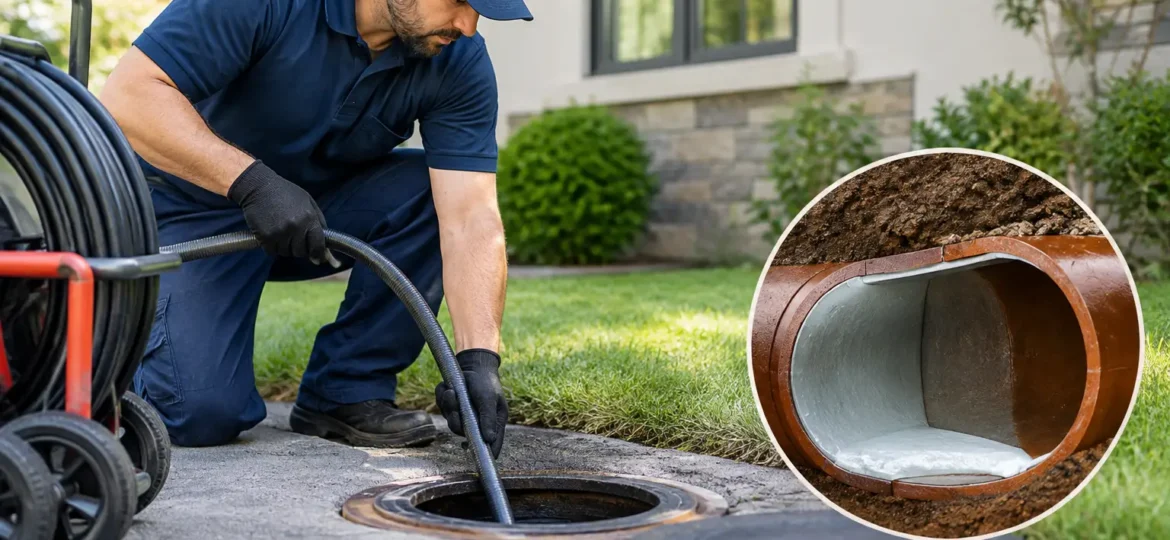
Drain cleaning is still useful. Cabling or hydro jetting can remove roots, paper, sludge, and grease that have built up inside the belly. If sewage is backing up, restoring flow is the first priority.
But cleaning does not raise a sagging pipe. It only clears what the low spot collected. Once normal use resumes, solids can begin gathering there again.
There are situations where periodic cleaning makes sense. For example, an older line with a minor belly may be functioning adequately, and excavation may not be practical right away due to a driveway, landscaping, or budget. Scheduled maintenance can reduce the chance of an emergency while you plan for replacement. It should be treated as management, not a permanent fix.
Sewer Line Belly Repair Options
The right repair depends on the pipe material, the depth of the line, how long the belly is, access to the area, and whether the pipe has additional damage. A straight answer matters here: not every trenchless option can correct a grade problem.
Excavation and Pipe Regrading
For a true belly, excavation is often the most dependable repair. The affected section is uncovered, removed, and replaced on properly prepared bedding with the correct slope. The trench is then backfilled carefully so the new pipe has solid support and is less likely to settle again.
This method can be more disruptive to a yard, driveway, or landscaping than an internal repair. However, it directly addresses the reason the line failed. If the pipe is crushed, separated, badly cracked, or improperly sloped over a significant distance, digging and regrading is usually the repair that makes sense.
Spot Repair for a Short Failed Section
If the belly is limited to a small, accessible area and the rest of the line is in good condition, a spot repair may be enough. The crew excavates only the problem area, replaces the damaged section, and confirms the repaired line drains correctly.
This can control the scope and cost of the project. It is not the right choice if the camera inspection shows multiple low spots, widespread root damage, or aging pipe that is failing in several locations.
Pipe Bursting or Full Line Replacement
When an older sewer line has repeated failures along its full length, replacement may be the better investment. Pipe bursting can replace certain lines with less surface disruption than traditional open-trench digging, depending on the route, pipe condition, and site layout.
Pipe bursting is not a cure for every belly. The new line still must follow a proper grade. If the route itself needs to be changed or corrected, excavation may be necessary at key points. An experienced sewer contractor will explain where trenchless work fits and where it does not.
What About Pipe Lining?
Pipe lining can seal cracks, small holes, and leaking joints in some sewer pipes. It can be a strong option for structural defects when the existing pipe has the right shape and slope.
A liner does not lift a sagging pipe. In fact, lining a section with a serious belly leaves the low spot in place. The line may be sealed, but wastewater can still sit in the dip and collect debris. If someone recommends lining without addressing whether the pipe grade is correct, ask to see the camera findings and the proposed solution in writing.
What Affects the Cost of Repair?
The cost of sewer line belly repair is based on what is underground, not just what is visible at the drain. Depth is a major factor. A line under a shallow lawn is a different job than a line beneath a driveway, slab, parking area, or mature landscaping.
The length of failed pipe, soil conditions, utility locations, pipe material, access for equipment, permits, and restoration also affect the final price. If the issue involves a septic system, the location of the tank and drain field must be considered as well.
Be cautious with a quote given before the line is inspected. A fair estimate should explain the diagnosed problem, the repair area, what will be replaced, and what restoration is included. Flat-rate upfront pricing gives property owners a clearer picture before work begins.
Do Not Wait for a Full Sewage Backup
A sewer belly rarely improves on its own. The longer debris sits in the low spot, the more likely you are to face repeated clogs, root growth, wastewater backup, and possible damage inside the property. For a rental or commercial building, a failed main line can also disrupt tenants, customers, and daily operations.
If drains are backing up now, get the line cleared and inspected promptly. Chatta-Rooter Plumbing provides sewer camera inspections, main line cleaning, excavation-based sewer repairs, and emergency service when wastewater problems cannot wait.
The practical next step is simple: get clear footage of the line, understand whether the low spot is actually causing trouble, and choose a repair that corrects the grade instead of paying to clear the same blockage again.