

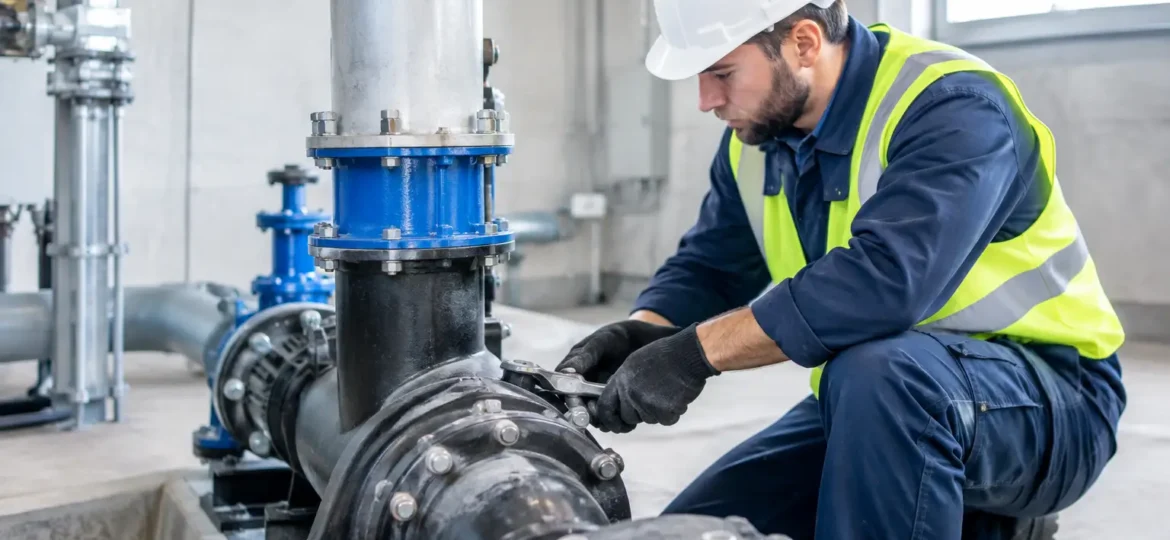
A high-level alarm at a commercial lift station is not a problem to watch for a few days. Once wastewater rises past the normal operating range, a facility can face sewage backup, unpleasant odors, business interruptions, and potential health concerns. This commercial lift station repair example shows how a fast, methodical response can stop the immediate problem and uncover what caused it.
The situation is representative of a common call from a small commercial property with multiple restrooms, a break room, and regular customer traffic. The station served a building located below the main sewer connection, so every flush and drain depended on two sewage pumps working as designed. When the system failed, there was no gravity sewer backup plan.
The Call: Alarm On, Water Rising
The property manager called after hearing the audible alarm outside the lift station. Employees had also noticed one restroom draining slowly and a sewer odor near the back of the building. The alarm panel showed a high-water condition, meaning the sewage level inside the wet well had climbed above the normal pump-on level.
That alarm does not automatically mean a pump has burned out. A commercial lift station can alarm because of a tripped breaker, failed float switch, clogged pump intake, damaged control panel, overloaded pump, broken discharge line, or a pump that is simply worn out. Guessing wastes time. The first job is to make the site safe, control the wastewater level, and diagnose the actual failure.
Because the building was still open, the manager shut down nonessential water use. Restrooms were limited, the mop sink was taken out of service, and employees were told not to run dishwashers or dump water into drains. That reduced incoming flow while the repair was underway.
Commercial Lift Station Repair Example: Finding the Failure
At the station, the technician checked the alarm panel, power supply, breakers, control floats, and pump operation before pulling anything apart. The panel had power. The alarm float was doing its job. One pump was running but moving very little wastewater. The second pump would not start at all.
The wet well level was high enough that the working pump should have been cycling down quickly. Instead, it ran continuously and barely lowered the level. That pointed to a discharge-side restriction, an impeller problem, or a pump unable to develop enough pressure.
The technician used proper safety procedures before accessing the basin. Lift stations can contain toxic gases and low oxygen levels. This is not a place for a property owner or maintenance employee to lean over an opening and try to free a float by hand. Confined-space hazards are real, and sewage equipment requires the right training, protective gear, and equipment.
After isolating power and lifting the first pump assembly, the cause became clear. Rags and so-called flushable wipes had wrapped around the pump intake and impeller. The impeller was damaged from running while restricted. The second pump had a separate issue: its power cord connection had deteriorated, allowing moisture into the connection and causing the motor protection to trip.
This was a two-part failure. One pump had been choked by debris, while the standby pump was unavailable when it was needed most. That is exactly why commercial lift stations need regular testing. A duplex system gives a business backup capacity only if both pumps, floats, controls, and power connections are in working order.
Repairing the Pump System the Right Way
The immediate goal was to restore reliable pumping without creating another weak point. The damaged pump was removed from service and replaced with a properly matched commercial sewage pump. Pump selection matters. Installing the wrong horsepower, flow rating, or head-pressure rating can lead to short cycling, poor discharge performance, higher electrical use, or another failure under heavy demand.
The failed electrical connection was repaired, and the second pump was inspected before being returned to service. Both pumps were cleaned, the basin was cleared of debris, and the check valves were examined to make sure wastewater could not flow backward into the wet well after each pump cycle.
The technician also inspected the guide rails, discharge piping, seals, and float cords. A float that catches on the basin wall or gets tangled around a pump cord can prevent the system from turning on or shutting off at the right time. A simple float problem can become a major overflow if nobody checks it until the alarm sounds.
Once the mechanical repairs were complete, the station was tested through multiple cycles. The primary pump was allowed to start and stop at its normal levels. The backup pump was then tested independently. Finally, the high-water alarm was activated to confirm the audible and visual alerts worked as they should.
The system passed testing, the wastewater level returned to normal, and the property could resume normal water use. Just as important, the manager received a straight answer about what failed, what was repaired, and what should be checked going forward.
Why the Backup Pump Did Not Save the Day
Many commercial owners assume a two-pump station means they are protected from an emergency. It helps, but redundancy is not the same as maintenance.
In this case, the primary pump had been carrying more load than it should because wipes and debris were collecting in the basin. The second pump had not been tested recently, so the damaged connection went unnoticed. When the primary pump lost capacity, the backup could not take over.
A lift station can also fail when the lead-lag controls are not alternating pumps. If the same pump handles every cycle, it wears out faster while the other pump sits unused. Alternating operation spreads the workload and makes it easier to spot a pump that will not run when called on.
For facilities with high water use, even a short period without pumping can become a serious problem. Restaurants, medical offices, apartment buildings, retail centers, warehouses with employee restrooms, and commercial properties with grinder pumps all need a plan for pump station maintenance.
What Prevents the Next Commercial Lift Station Emergency
The best maintenance plan depends on the building’s water use, the type of waste entering the system, pump age, and whether the property has a history of clogs or alarms. A busy facility may need more frequent service than a small office with limited restroom use.
A practical inspection should include pump run-time checks, amp draw readings, float testing, alarm testing, basin cleaning, check-valve inspection, and a review of the control panel. If a station uses grinder pumps, the technician should also look for items that do not belong in the system, including wipes, feminine products, paper towels, diapers, grease, and trash.
Property managers should keep a simple log of alarm events, pump repairs, and maintenance dates. That record helps identify patterns. For example, alarms that happen after heavy rain may point to groundwater infiltration or stormwater entering the system. Frequent clogs may be a tenant-use problem. Pumps that run longer each month may signal a developing blockage or worn impeller.
It is also smart to ask whether the station has an emergency response plan. Staff should know where the alarm panel is, who to call, and how to limit water use until help arrives. They should not attempt electrical or sewage-pump repairs without qualified service. A bad decision around sewage and power can turn a repair call into an injury or cleanup job.
When Repair Makes Sense and When Replacement Is Better
Not every pump failure requires a full lift station replacement. A newer pump with a damaged float, faulty connection, clogged intake, or failed check valve can often be repaired at a reasonable cost. Replacing a pump may be the better move when the motor is failing, the impeller is severely worn, parts are obsolete, or the pump has a repeated history of trouble.
The larger decision depends on the whole station. If the basin, controls, floats, piping, and pumps are all aging together, repeated spot repairs can cost more than a planned upgrade. On the other hand, replacing equipment that still has useful life is not always the honest answer. A good contractor explains the options, the risks, and the price before work begins.
For Chattanooga-area businesses, Chatta-Rooter Plumbing provides commercial pump, sewer, septic, and emergency wastewater service with upfront pricing and experienced technicians. When a lift station alarm goes off, fast diagnosis matters. The right repair keeps a manageable equipment problem from becoming a sewage backup that shuts down your operation.
If your lift station has an alarm, odors, slow drains, or pumps that seem to run constantly, treat it as an early warning. Getting it checked while the system is still moving wastewater is usually far easier than dealing with the mess after it stops.