

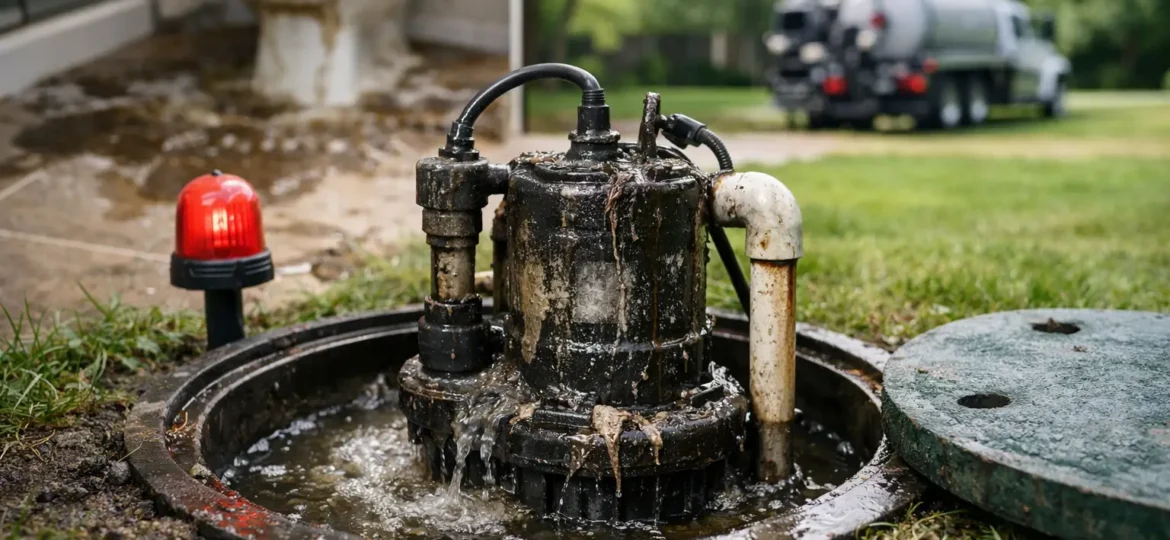
A grinder pump problem rarely starts with a dramatic sewage backup. More often, it starts with a warning homeowners brush off: an alarm that keeps chirping, a toilet that drains slowly, or a foul smell near the pump basin. Knowing the top signs of grinder pump failure gives you time to call for service before wastewater reaches your home, business, or yard.
A grinder pump handles sewage from a property that sits below the main sewer line or relies on a pressurized septic system. It grinds solid waste and pumps it through a narrow discharge line. When it cannot do that job, wastewater has nowhere safe to go. That is why a suspected grinder pump issue deserves prompt attention, not a wait-and-see approach.
What a Grinder Pump Failure Can Do to Your Property
Your grinder pump works behind the scenes, but it supports every drain connected to the system. When the pump stalls, loses power, clogs, or cannot overcome pressure in the discharge line, sewage can begin collecting in the basin. Once that basin fills, fixtures inside the building may stop draining or back up.
The damage can range from an inconvenient service call to contaminated floors, ruined materials, business downtime, and a major cleanup. Acting on the first warning is usually less expensive than dealing with an overflow.
Top Signs of Grinder Pump Failure
The alarm is sounding or flashing
Most grinder pump systems have a high-water alarm. It may be mounted outside, in a utility area, or near the electrical panel. The alarm means the wastewater level in the basin has risen higher than it should because the pump has not moved it out fast enough.
Do not shut off the alarm and assume the problem is solved. The alarm may stop after the water level drops, but the underlying issue could still be a failing float switch, weak pump motor, blocked line, or intermittent electrical connection. Reduce water use immediately and have the system checked.
Drains are slow throughout the building
One slow sink may be a local drain clog. Slow toilets, tubs, showers, and sinks throughout the property are different. When several fixtures drain poorly at the same time, wastewater may be backing up because the grinder pump basin is full or the discharge line is restricted.
This is especially urgent if the property uses a grinder pump for all wastewater. Avoid running the dishwasher, washing machine, or additional showers until the issue is diagnosed. Every gallon sent down a drain adds to the basin.
Sewage is backing up into tubs, showers, or lower drains
A sewage backup is one of the clearest signs of a grinder pump failure. Lower fixtures usually show trouble first because they are the easiest place for wastewater to escape when the system cannot move sewage away.
Do not keep flushing toilets or trying chemical drain cleaners. Those steps can make the mess worse and will not repair a failed pump. Keep people and pets away from contaminated water, stop using plumbing fixtures, and call for professional sewage and pump service.
You hear unusual sounds from the pump basin
A working grinder pump makes noise during its normal run cycle, then stops. Trouble sounds are different: loud humming without pumping, repeated clicking, grinding that lasts too long, rattling, or a pump that runs constantly.
A steady hum can mean the motor has power but the impeller cannot turn. Constant operation may point to a stuck float switch, a failing check valve, a damaged pump, or a blockage in the line. Repeated short cycles can also wear out a motor quickly. These are not sounds to ignore, even if the drains still appear normal.
Bad odors are coming from the basin or drains
Sewage odors around the pump tank, outside vent, drains, or basement can signal that wastewater is sitting where it should not. A failing pump allows solids and sewage to remain in the basin longer, creating stronger odors and gas buildup.
Odors do not always mean the pump itself has failed. A cracked lid, damaged seal, blocked vent, or plumbing trap issue can also be responsible. Still, a strong or persistent sewage smell deserves an inspection, particularly when it appears alongside slow drains or an alarm.
The pump trips the breaker or loses power
If the grinder pump breaker keeps tripping, do not reset it over and over. A tripped breaker may result from a motor problem, damaged wiring, moisture in electrical components, or a pump that is drawing too much power under load.
Check whether the pump control panel has lost power, but leave electrical repairs and pump testing to a qualified service technician. Resetting a breaker once may be reasonable after a temporary outage. Repeated trips mean there is a problem that needs to be found before the system is put back into service.
The pump will not turn on after heavy water use
Grinder pumps should activate automatically when wastewater reaches a set level. If the basin fills after laundry, showers, or heavy commercial use and the pump does not start, the float switch may be stuck, the control panel may have an issue, or the motor may have failed.
This situation can turn into an overflow quickly. Stop sending water down drains. If you can safely see that the alarm is active, treat it as an urgent pump service call.
Wet ground or sewage near the pump area
Standing water, unusually soggy soil, or sewage around the pump basin is never normal. The problem may be an overflowing basin, broken pipe, damaged lid, failed seal, or a problem with the discharge connection.
Outdoor leaks can contaminate the area and may get worse when the system receives more wastewater. Keep children and animals away from the spot until it has been inspected and cleaned properly.
What Causes a Grinder Pump to Fail?
Grinder pumps are built for hard work, but they are not built to process everything people send down toilets and drains. Wipes labeled “flushable,” paper towels, feminine products, diapers, dental floss, grease, coffee grounds, and small objects can jam the grinder or restrict the pump system. Only human waste and toilet paper belong in the toilet.
Age and normal wear also matter. A motor, impeller, float switch, check valve, control panel, or electrical component can eventually fail. Power surges and outages can create problems as well. In some cases, the pump is working but a blocked, frozen, crushed, or damaged discharge line prevents it from moving wastewater out.
That is why guessing can cost money. Replacing a pump will not fix a damaged line, and clearing a line will not repair a burnt-out motor. A proper diagnosis checks the basin level, controls, float operation, pump performance, electrical supply, and discharge path.
What to Do When You Suspect a Problem
First, cut water use as much as possible. Do not run washing machines, dishwashers, showers, or large amounts of water. Do not keep flushing to test whether the toilet will clear. If sewage has backed up, stay out of the affected area and avoid direct contact.
Next, check for an active alarm or a tripped breaker only if doing so is safe and easy. Do not open the pump basin, reach into it, or attempt to pull the pump yourself. Grinder pump basins contain hazardous sewage gases and electrical equipment. What looks like a simple blockage can become a dangerous job fast.
For homes, rental properties, restaurants, offices, and other commercial buildings, fast diagnosis protects the property and limits downtime. A technician can determine whether the system needs a repair, line clearing, float replacement, electrical work, or a new grinder pump.
When It Is an Emergency
Call for immediate service if sewage is coming into the building, the alarm is active and the basin level is rising, multiple drains have stopped working, or wastewater is leaking around the pump area. Those conditions can escalate quickly, especially when occupants continue using water.
Chatta-Rooter Plumbing provides 24/7 grinder pump, septic, sewer, and sewage cleanup service for property owners who need a straight answer and a real repair. The right move is to stop adding water to the system, protect the area, and get experienced help before a pump issue becomes a full-scale backup.