

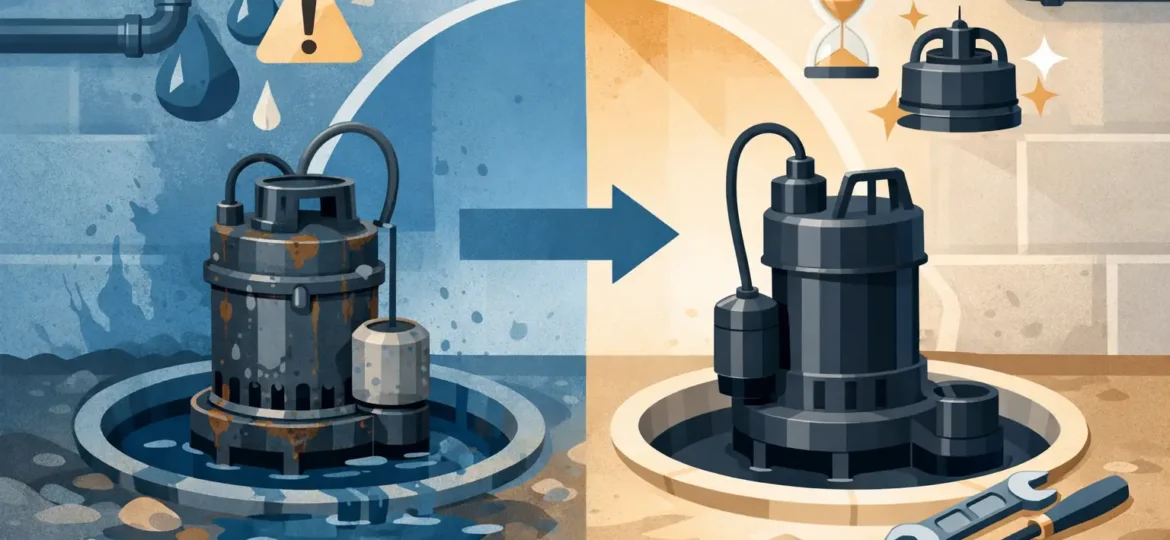
A sump pump usually waits quietly in the background until the night you need it most – during a hard rain, a power outage, or a fast basement flood. That is exactly why homeowners ask when should sump pump replaced instead of repaired. If your pump is getting older, cycling nonstop, or making strange noises, waiting too long can turn a manageable issue into water damage, mold, and a cleanup bill you did not need.
When should sump pump replaced instead of repaired?
The short answer is this: most sump pumps should be replaced around the 7 to 10 year mark, even if they still run. Some last longer. Some do not make it that far. It depends on how often the pump runs, how clean the pit stays, the quality of the installation, and whether the unit is sized correctly for the home.
If the pump is relatively new and the problem is minor, a repair can make sense. A stuck float switch, a clogged discharge line, or a bad check valve may be worth fixing. But if the motor is wearing out, the housing is corroded, or the unit has already had repeated service calls, replacement is usually the smarter move.
A sump pump is not like a dripping faucet where you can put it off for a while. Once it fails, you often find out during bad weather when every plumber in town is already busy. That is why age and reliability matter just as much as whether it still turns on today.
The average lifespan of a sump pump
Most residential sump pumps last about 7 to 10 years. A high-quality pump in a clean basin with light use may push past 10 years. A pump that runs often, handles gritty water, or has gone through power issues may fail sooner.
Submersible pumps often have a more protected setup because they sit in the basin and are designed for direct water contact, but they still wear out. Pedestal pumps can last a little longer in some cases because the motor sits above the pit, but they tend to be louder and may not be the best fit for every basement or crawl space.
Usage is a big factor. A home with a high water table or recurring stormwater intrusion will put more hours on a pump than a home that only sees occasional groundwater buildup. If your sump pump runs hard every rainy season, you should think in terms of preventative replacement, not just emergency repair.
Signs your sump pump is getting close to the end
Sometimes a sump pump fails all at once. More often, it gives warning signs first.
If the pump makes grinding, rattling, or humming noises that were not there before, that can point to motor wear or a jammed impeller. If it runs constantly or short cycles on and off, the switch may be failing, the basin setup may be off, or the pump may no longer be moving water the way it should.
Visible rust can also be a red flag, especially around the motor housing or battery backup connections. Corrosion does not always mean immediate failure, but it does mean the unit is aging in a damp environment and should be watched closely.
Another common sign is poor performance. If the pit fills up but the water level drops slowly, the pump may be losing capacity. If the unit runs but does not discharge water properly, the issue could be the pump itself or the discharge line. Either way, that is not something to ignore before the next storm hits.
A sump pump that turns on at random, trips breakers, or fails to start consistently is also on borrowed time. Electrical issues around water are never a wait-and-see situation.
When repair still makes sense
Not every sump pump problem means you need a full replacement.
If the pump is only a few years old and the issue is isolated, repair may be the right call. A clogged intake screen, frozen discharge pipe, bad float switch, or failed check valve can often be corrected without replacing the whole unit. In those cases, a professional inspection can tell you whether the core pump is still in good shape.
The key is cost versus confidence. If a repair is inexpensive and gives you a dependable system again, it is money well spent. If you are stacking repair after repair onto an aging pump, you are usually better off replacing it before it quits at the worst possible time.
That is especially true for landlords, business owners, and anyone with a finished basement, stored inventory, or equipment near floor level. Reliability matters more than squeezing a little extra life out of a worn-out unit.
When replacement is the better move
Replacement is usually the better option when the pump is near or past its expected lifespan, has a failing motor, has recurring switch problems, or cannot keep up with the water load anymore.
It is also a good idea to replace a sump pump after a major flooding event if the unit was submerged beyond its design limits, packed with debris, or clearly strained during the incident. A pump may still run after that, but that does not mean it is trustworthy.
Homeowners should also consider replacement if the existing pump was undersized from the start. A pump that runs nonstop during heavy rain may not be failing – it may simply be the wrong pump for the job. In that case, replacing it with the correct capacity can prevent future flooding and reduce wear on the system.
If your home depends heavily on the sump pump, adding a battery backup during replacement is often a smart move. A lot of flooding happens during storms that knock out power. A strong primary pump will not help much if it goes dead with the breaker panel still on and the grid down.
Why timing matters more than people think
A lot of property owners wait until the pump completely stops. That sounds practical, but it can be expensive.
Sump pumps rarely choose a convenient time to fail. They usually break down when they are under pressure – during long rain events, saturated ground conditions, or after days of nonstop cycling. By then, the basement or crawl space is already at risk.
Replacing a weak sump pump on your schedule is almost always cheaper and less stressful than emergency flood cleanup. Water damage can ruin drywall, flooring, furniture, storage, and electrical components. Even a small amount of standing water can create mold problems fast.
For commercial properties, the stakes can be even higher. Downtime, inventory damage, tenant complaints, and safety concerns can all start with one pump that should have been replaced sooner.
How to know if your current sump pump needs a professional inspection
If you do not know how old the unit is, that alone is a good reason to have it checked. Many homeowners move into a house and inherit a sump pump with no service history. If it looks worn, sounds rough, or has no visible install date, do not guess.
You should also schedule an inspection if the pump has not been tested recently, if you have noticed moisture around the basement, or if the system has gone through a heavy storm season. A proper inspection should look at the pump, pit, float, discharge line, check valve, electrical connection, and backup setup if one is installed.
For Chattanooga-area homeowners dealing with drainage, groundwater, or pump issues, Chatta-Rooter Plumbing can tell you whether your sump pump is still reliable or whether replacement makes more sense now than a flooded basement later.
Should you replace a sump pump before it fails?
In a lot of cases, yes.
If your pump is 8 to 10 years old, shows wear, and protects an area where water damage would be costly, replacing it before total failure is the safer move. That does not mean every older unit must go immediately. It means you should weigh the age, condition, usage level, and what is at risk if it quits.
A sump pump is one of those pieces of equipment that earns its keep in emergencies. You do not need it to look impressive. You need it to work without hesitation when the pit starts filling up.
If your current pump is giving you reasons to doubt it, trust that instinct and get it checked before the next hard rain puts it to the test.