

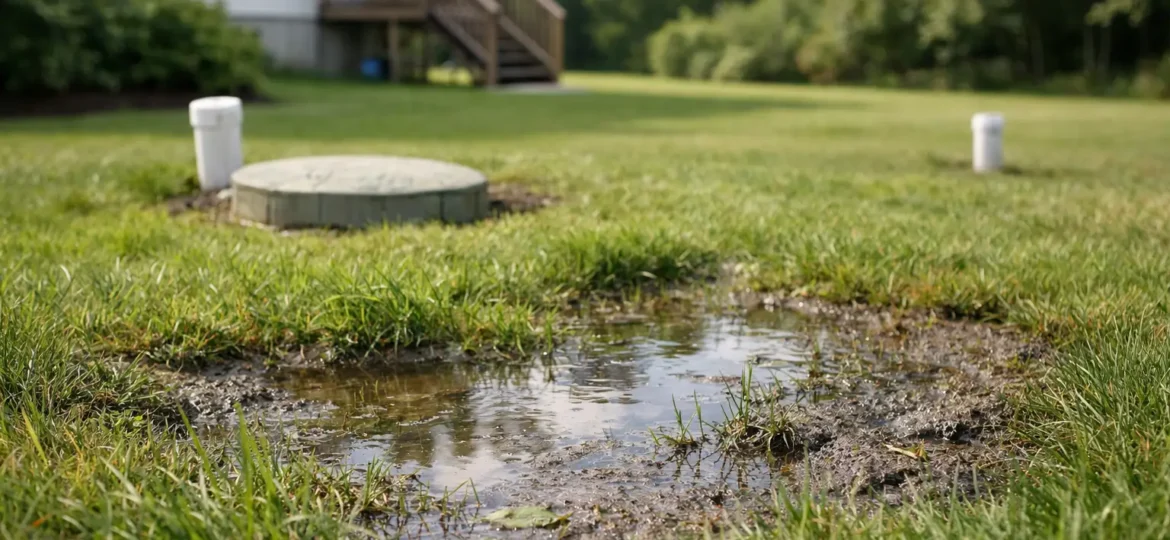
You walk outside, look over the septic area, and the ground is soggy even though it has not rained. If you are asking why is yard wet over septic, treat that as a warning sign, not a minor annoyance. Wet ground above a septic tank or drain field usually means something in the system is not moving wastewater the way it should.
Sometimes the problem is simple, like oversaturated soil after heavy rain. Other times, it points to a full tank, a clogged line, or a failing drain field. The key is not guessing. Septic problems get more expensive the longer they sit, and wet ground is one of the clearest early signs that your system needs attention.
Why is yard wet over septic in the first place?
A septic system is supposed to send wastewater through the tank, separate solids from liquids, and move treated effluent into the drain field where the soil finishes the job. When everything is working right, you should not see standing water, swampy patches, or mushy grass over the system.
If the yard is wet over the septic area, one of two things is usually happening. Either too much water is entering the system, or the system cannot absorb and disperse water fast enough. That can happen for several reasons, and the location of the wet spot matters.
If the soggy area is near the tank, the issue may involve the tank itself, an inlet or outlet problem, or a broken line. If the wet area is spread across the drain field, the problem is more likely tied to poor drainage, saturated soil, or drain field failure.
The most common causes of a wet yard over septic
The septic tank is overdue for pumping
This is one of the most common causes, and it is also one of the most preventable. When a tank gets too full of solids, there is less room for wastewater to settle and separate. Solids can move where they should not, clogging the outlet or getting pushed into the drain field.
Once that happens, the system stops processing water efficiently. The result can be wet soil above the tank or drain field, slow drains in the house, gurgling plumbing, and eventually sewage backup.
If your tank has not been pumped on schedule, that is one of the first things to consider.
The drain field is overloaded
Even a healthy septic system has limits. If a lot of water is entering the system in a short period, the drain field may not keep up. Long showers, back-to-back laundry loads, leaking toilets, and heavy water use from a large household can all overload the field.
When the drain field is receiving more water than the soil can absorb, the ground above it may stay wet. In early stages, this may come and go. Over time, repeated overloading can damage the field and shorten its lifespan.
Heavy rain has saturated the soil
Sometimes the septic system itself is not the original problem. After periods of heavy rain, the ground around the drain field can become so saturated that wastewater has nowhere to go. The field needs unsaturated soil to filter and disperse effluent. If the soil is already holding too much water, the system backs up from the ground level up.
This is where it depends. A brief wet patch after a major storm may clear up once conditions dry out. A wet area that lingers for days, smells bad, or keeps returning during normal weather usually points to a deeper septic issue.
A pipe is damaged or blocked
A crushed pipe, root intrusion, sludge blockage, or broken connection can keep wastewater from moving properly through the system. That can create pooling in a specific area of the yard, especially between the house and the tank or between the tank and the drain field.
In these cases, the wet spot may be more isolated instead of spread broadly across the field. You might also notice indoor warning signs at the same time, like toilets flushing slowly or sinks draining poorly.
The drain field is failing
This is the issue homeowners hope it is not, but it does happen. Drain fields can fail from age, poor maintenance, soil compaction, root damage, grease buildup, or years of solids escaping the tank. Once the soil in the field is clogged, it cannot absorb wastewater properly.
A failing drain field often causes persistent wet areas, bright green grass over the field, sewage odors, and recurring plumbing problems inside the building. Pumping the tank may give temporary relief, but it will not fix a failed field.
Signs the wet yard is a serious septic problem
Not every damp patch means disaster, but some warning signs should move this out of the wait-and-see category.
If the yard smells like sewage, that is a strong sign wastewater is surfacing instead of staying underground. If toilets are backing up or drains throughout the house are running slow, the problem may already be affecting the whole system. If the grass above the septic area is much greener and thicker than the rest of the yard, excess wastewater may be feeding it.
Standing water is another big one. Damp soil after rain is one thing. Puddles over a septic area during dry weather are something else entirely.
What to do if your yard is wet over the septic area
Start by reducing water use right away. Hold off on laundry, take shorter showers, and avoid running the dishwasher repeatedly. If the system is overloaded, cutting back on water may prevent a backup inside the home while you get it checked.
Next, keep people and pets away from the soggy area. If wastewater is surfacing, that is a health hazard. It is not just dirty water. It can contain harmful bacteria and other contaminants.
Do not try to fix the problem with septic additives or store-bought chemicals. Those products are often oversold, and they do not repair broken pipes, full tanks, or failed drain fields. In some cases, they can make diagnosis harder or disrupt the tank’s natural balance.
You also do not want to drive or park over the wet area. Added weight can compact the soil, crush components, and make drain field damage worse.
How a septic pro figures out why the yard is wet over septic
A proper diagnosis matters because the fix depends on the cause. Pumping a full tank helps if the tank is the issue. It does not solve a broken line. Replacing a pipe does not restore a failed drain field.
A septic technician will usually start with the basics: tank level, sludge depth, system flow, signs of backup, and the condition of the lines. If needed, they may inspect baffles, check for clogs, and evaluate whether the drain field is accepting effluent the way it should.
That is where experience counts. Wet ground over septic can look similar from the surface, but the repair path can be very different depending on what is happening underground.
Can you wait and see?
Sometimes people want to give it a few days, especially after a storm. That can be reasonable if the area is only slightly damp, the weather has been unusually wet, and there are no indoor plumbing issues or sewage odors.
But if the ground is clearly soggy in dry weather, if the problem keeps returning, or if you are seeing any backup inside the home, waiting usually makes things worse. Septic issues have a way of escalating fast. A service call today is almost always cheaper than emergency cleanup, major drain field damage, or sewage inside the house later.
How to help prevent it from happening again
Routine pumping is the first line of defense. The right schedule depends on tank size, household size, and water use, but skipping maintenance is one of the fastest ways to create expensive septic trouble.
It also helps to spread out water use instead of doing everything in one day. Fix leaking fixtures quickly. Keep grease, wipes, and other non-flushable material out of the system. Protect the drain field from vehicle traffic and avoid planting trees too close to septic components.
If your property has had recurring wet spots, inspections matter even more. Catching a developing issue early can be the difference between a straightforward repair and a full drain field replacement.
A wet yard over a septic system is not something to ignore or cover up with fresh dirt and hope. If the ground is staying soggy, smelling bad, or causing plumbing trouble inside, get it checked by a septic company that knows how to diagnose the real problem and fix it without wasting your time. That is the kind of call worth making before a warning sign turns into a mess.