

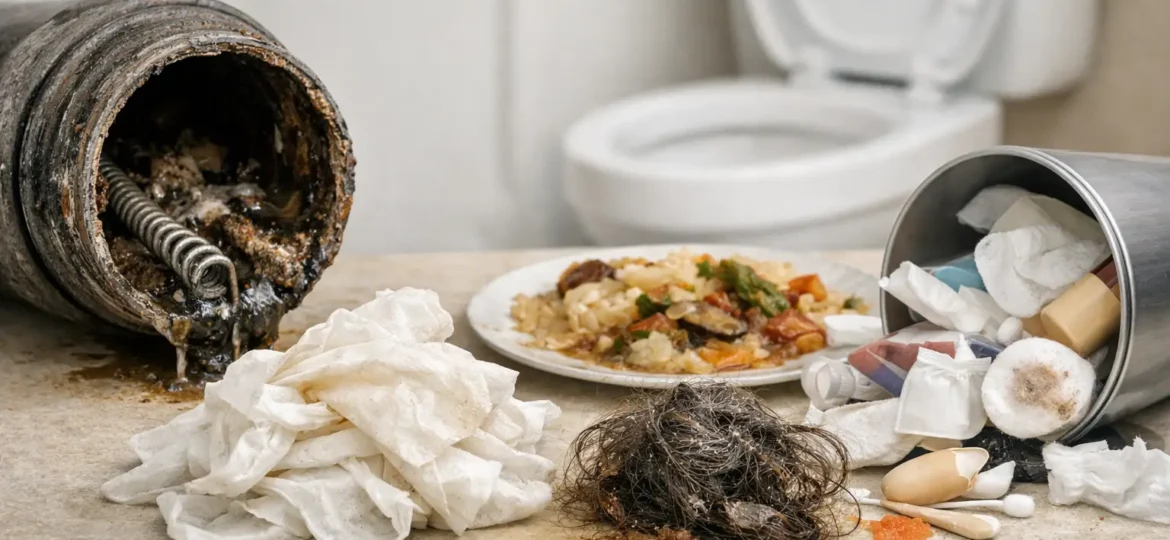
A sewer line usually gives you some warning before it quits completely. Maybe the tub starts draining slow. Maybe the toilet bubbles when the sink runs. Maybe there is a bad smell outside that was not there last week. The top causes of sewer blockages are usually not random. They build up over time, and if you know what causes them, you have a better shot at stopping a backup before it turns into a real mess.
Top causes of sewer blockages homeowners miss
Most people assume a sewer clog starts with one bad flush or one heavy rain. Sometimes that is true, but more often the real problem has been growing for months or even years. A main sewer line handles everything leaving the house, so small issues inside the system can turn into a full blockage when enough waste, paper, grease, or debris catches in one spot.
The biggest mistake homeowners make is treating recurring drain trouble like a minor inconvenience. If more than one fixture is acting up, or if the lowest drain in the house is backing up first, the problem may not be in a sink trap or branch line. It may be in the sewer line itself.
Grease, fats, and food waste
Kitchen drains are one of the most common starting points. Grease looks harmless when it is hot and liquid, but once it cools in the pipe, it sticks to the walls and starts grabbing everything that passes through. Soap residue, food scraps, and other debris build onto that layer until the pipe opening gets smaller and smaller.
This is one reason a sewer blockage can seem to come out of nowhere. The pipe may have been narrowing for a long time before the first obvious symptom showed up. Homes with garbage disposals tend to see this more often because people assume ground-up food is safe for the drain. Some of it is. A lot of it is not.
Flushable wipes and hygiene products
One of the top causes of sewer blockages today is wipes. Even when the package says flushable, that does not mean the product breaks down like toilet paper. In the real world, wipes hold together, snag on rough spots in the pipe, and collect other waste behind them.
The same goes for paper towels, feminine hygiene products, cotton swabs, dental floss, and diapers. Toilets are built to handle human waste and toilet paper. That is it. Once those other materials enter the line, they can create a thick obstruction that standard plunging will not fix.
Tree root intrusion
Roots are a major problem in older sewer systems, especially where clay pipes, aging joints, or small cracks give roots a place to enter. Trees and shrubs naturally seek moisture. A sewer line gives them a steady source of water and nutrients, so even a tiny opening can attract aggressive growth.
At first, roots may only slow the flow. Then they spread across the inside of the pipe and start catching toilet paper and solids. Over time, they can crack the line further, shift sections out of place, or completely choke off the pipe. This is one of those problems where clearing the blockage is only part of the job. If the damaged section is still there, the roots usually come back.
Why sewer lines block up over time
Not every blockage is caused by what gets flushed. Sometimes the condition of the line matters just as much as what flows through it. Sewer systems age, settle, crack, and shift. Once the pipe loses its proper shape or slope, waste stops moving the way it should.
Old, damaged, or collapsed sewer pipes
Older homes can have sewer lines made of clay, cast iron, Orangeburg, or other materials that do not hold up forever. Clay can crack. Cast iron can corrode and flake on the inside. Orangeburg can deform under pressure. Any of these issues can restrict flow and create spots where debris hangs up.
A partial collapse is especially serious because it turns a cleaning problem into a repair problem. You might be able to punch through the obstruction temporarily, but if the pipe is crushed or badly offset, the blockage will keep returning. That is why a camera inspection matters when there is a repeat issue. It shows whether the line just needs cleaning or whether it is structurally failing.
Bellied sewer lines and poor slope
A sewer line needs the right pitch to move waste downhill. If part of the line settles and creates a low spot, water and solids can collect there instead of flowing out. Plumbers often call this a belly in the line.
Bellies are tricky because the symptoms come and go. The line may drain fine for a while, then clog when enough solids collect in that low section. In some cases, regular cleaning can buy time. In others, repair is the only real answer.
Scale, sludge, and long-term buildup
Not every pipe blockage is a dramatic object stuck in the line. Some are just years of buildup. Soap scum, mineral scale, sludge, paper fiber, and grease can coat the inside of a sewer line until it loses a lot of carrying capacity.
This is common in older cast iron systems, where corrosion creates a rough interior surface. Waste catches more easily, and each new layer makes the next blockage more likely. Hydro jetting can be a strong option here because it clears more of the pipe wall than a basic cable cleaning. Still, it depends on the condition of the line. A badly deteriorated pipe may need a gentler approach or replacement.
Outside conditions that can make blockages worse
Some sewer issues start inside the pipe. Others get pushed over the edge by what is happening outside.
Heavy rain can expose weaknesses in a damaged sewer system. If the line has cracks, bad joints, or root intrusion, groundwater can enter and overload the system. In low-lying areas, saturated soil can also increase pressure on already weak piping. That does not mean every backup during a storm is caused by rain alone, but weather often makes an existing problem impossible to ignore.
For properties on septic systems, a backup may not be a sewer line clog in the city-system sense at all. A full tank, failing drain field, blocked outlet baffle, or pump issue can create symptoms that look a lot like a sewer blockage inside the house. That is where proper diagnosis matters. You do not want to pay for the wrong fix.
Signs the problem is in the main sewer line
A single slow sink usually points to a local drain problem. A main line problem tends to affect multiple fixtures. If the toilet gurgles when the washing machine drains, if the tub backs up when you flush, or if sewage shows up in a floor drain, that is a stronger sign the blockage is farther down the system.
Bad odors in the yard can also point to a sewer issue, especially if they come with soggy ground or unusually green patches. Inside the house, the warning signs often build in stages. First it is slow drainage. Then it is bubbling or gurgling. Then it is wastewater coming back where it should not.
Once sewage is backing up, the situation has already moved past a simple inconvenience. Wastewater carries bacteria and creates a cleanup problem fast. At that point, speed matters.
How to reduce the risk of sewer blockages
The best prevention is pretty simple. Do not pour grease down the kitchen drain. Do not flush wipes, paper towels, or hygiene products. Be careful about what goes through the garbage disposal. If you have large trees near the sewer route, keep root intrusion on your radar.
It also helps to take recurring drain problems seriously. If the same bathroom keeps acting up or multiple fixtures are slow at once, getting the line inspected early can save a lot of damage later. A professional cleaning done before a total stoppage is usually cheaper and much less stressful than an emergency sewage backup.
For older homes and commercial properties, maintenance matters even more. High-use systems collect buildup faster, and aging lines are less forgiving. Some properties benefit from scheduled cleaning or periodic camera inspections, especially if there is a history of roots, grease, or repeated clogs.
When it is time to call for help
If you are dealing with one slow drain, you may be able to handle it with basic troubleshooting. If several fixtures are involved, if sewage is backing up, or if the clog keeps returning, it is time to get it checked by a pro with the right equipment. A cable machine might open the line. A camera inspection can show why it blocked. Hydro jetting may be the best fix for heavy buildup. If roots or pipe damage are involved, repair may be the only long-term solution.
That is the difference between a temporary opening and an actual fix. Companies like Chatta-Rooter Plumbing handle these jobs every day, and the right diagnosis is what keeps a bad sewer problem from becoming a repeat one.
A sewer line does not have to fail without warning. Most of the time, it starts with small signs and common causes. Catch those early, and you have a much better chance of fixing the problem before your home or property has wastewater where it should never be.