

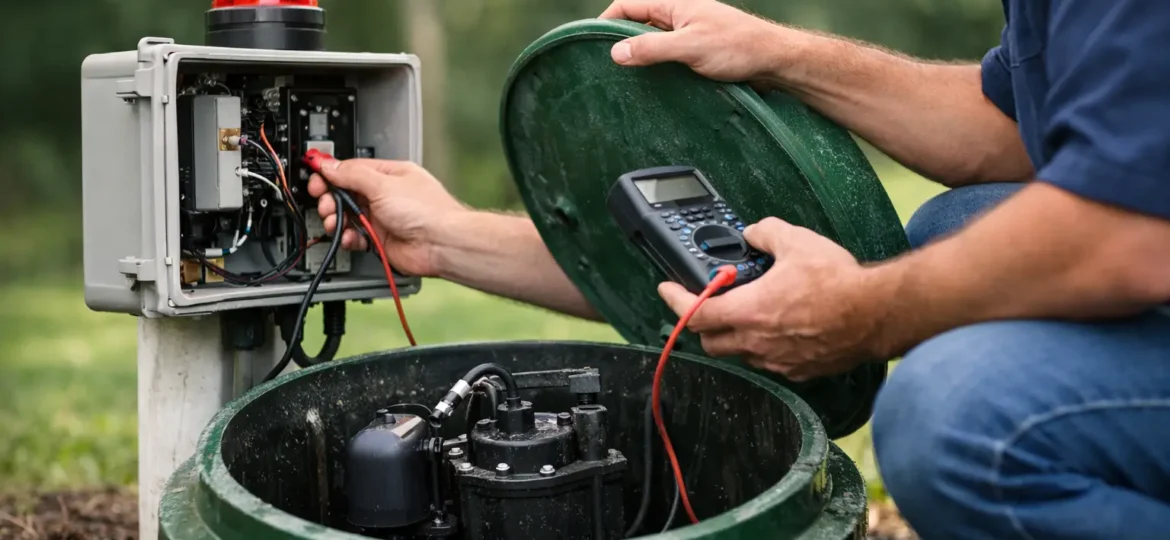
That alarm usually goes off at the worst possible time – late at night, during heavy water use, or right before guests show up. If you need to know how to troubleshoot grinder pump alarms, the first thing to understand is simple: the alarm means wastewater is not moving out the way it should. That does not always mean the pump is ruined, but it does mean you need to act fast and avoid making the problem worse.
A grinder pump system is designed to move wastewater from a lower elevation up to a sewer line or septic connection. When the tank level gets too high, the alarm is there to warn you before sewage backs up into the home or building. Some alarms are caused by power issues. Others point to a stuck float, a failed pump, a tripped breaker, or a blocked discharge line. The right response depends on what you find in the first few minutes.
What the alarm is really telling you
A grinder pump alarm usually means the liquid level inside the basin is above normal. The alarm does not always tell you exactly why. It only tells you the system is not keeping up.
That matters because there is a big difference between a temporary issue and a mechanical failure. If the home lost power for an hour, the pump may simply need time to catch up. If the breaker keeps tripping or the pump hums without pumping, that points to a more serious problem. The alarm is a warning, not a diagnosis.
Before you start checking anything, reduce water use immediately. Do not run the dishwasher, washing machine, or long showers. Flush toilets only if absolutely necessary. Every gallon you send into the system raises the level in the basin and increases the chance of an overflow.
How to troubleshoot grinder pump alarms safely
Start with safety. Grinder pumps handle raw sewage and use electrical components. If the area around the control panel is wet, if you smell burning, or if you see damaged wiring, stop there and call a professional. Do not take apart the pump basin. Do not reach into wastewater. And do not assume flipping switches at random is a good test.
If conditions are dry and safe, check whether the alarm panel has a silence button. Pressing silence may stop the noise, but it does not fix the problem. It just gives you room to inspect things without the constant alarm sounding.
Next, verify power. A grinder pump cannot move wastewater if it is not getting electricity. Check the breaker panel first. If the grinder pump breaker is tripped, reset it one time. If it trips again, leave it alone. A breaker that will not hold usually points to an electrical fault, a seized motor, or another issue that needs service.
Then check for a GFCI outlet if your setup includes one. Sometimes the problem is as simple as a tripped outlet in a garage, basement, or utility area. Reset it once and see if the system comes back online.
Common causes of grinder pump alarms
Power loss is one of the most common reasons an alarm goes off. After a storm or outage, the pump stops working but the house keeps sending wastewater into the basin. Once power is restored, the alarm may clear after the pump cycles normally. Give it a little time, but keep water use low until you know it is catching up.
A tripped breaker is another common cause. If it happened once after a power fluctuation, that may be all it was. If it keeps happening, there is an underlying problem. Repeated resets can damage equipment and create a bigger repair bill.
Float switch problems are also common. Most grinder pump systems use float switches to tell the pump when to turn on and when to trigger the high-water alarm. If a float gets stuck, tangled, or coated with grease and debris, the pump may not activate when it should. This is one of those issues that sounds simple but often needs a technician to confirm and correct safely.
Clogs in the discharge line can also trigger the alarm. Grinder pumps are built to handle wastewater, toilet paper, and normal sewage flow. They are not built for wipes, feminine products, paper towels, grease, or stringy materials. Even products labeled flushable can jam the system. When the line is restricted, the basin fills faster than the pump can empty it.
Then there is pump failure. Motors wear out. Internal components fail. Sometimes the pump runs but cannot build enough pressure to move waste uphill. Sometimes it does not run at all. If the alarm is active and the pump is silent, or if it hums without pumping, that is a strong sign you need service.
What you can check without making things worse
Look at the control panel for indicator lights. Some panels show whether the pump has power, whether the alarm is active, or whether a high-water condition is present. That can help narrow down the issue without opening anything.
Listen carefully. If the pump starts after a reset and sounds normal, the problem may have been temporary. If it makes a loud humming noise, clicks repeatedly, or runs nonstop, shut off extra water use and get it checked. Unusual sounds usually mean the system is struggling.
Pay attention to what was happening right before the alarm. Did the power flicker? Was there heavy laundry use? Did someone flush something that should not have gone down the drain? Context matters. It can help separate a simple overload from a true mechanical problem.
Also look around the property for obvious signs of trouble. Wet ground near the basin, sewage odors, slow drains throughout the building, or backups in lower-level fixtures all suggest the issue may be bigger than the alarm itself.
When not to keep troubleshooting
There is a point where more homeowner troubleshooting stops helping. If the breaker keeps tripping, if the alarm returns right after resetting, or if wastewater is backing up, it is time to stop experimenting. The same goes if your commercial property cannot afford downtime. A restaurant, office, rental, or multi-unit building can go from inconvenience to health hazard fast.
It also depends on the age of the system. If the grinder pump is older and the alarm has happened more than once recently, you may not be dealing with a one-time event. You may be looking at a worn pump, failing controls, or a system that needs repair before it fails completely.
That is where experienced septic and sewer service matters. A proper diagnosis is not guessing. It means checking voltage, amp draw, float operation, pump performance, and line conditions so the real cause gets fixed.
Preventing the next alarm
The best way to avoid grinder pump alarms is to be careful about what goes down your drains. Keep wipes, grease, hygiene products, paper towels, diapers, coffee grounds, and harsh debris out of the system. A grinder pump is tough, but it is not a trash can.
It also helps to spread out heavy water use when possible. Running multiple loads of laundry back to back while everyone is showering can overload a struggling system faster than you think, especially if the pump is already dealing with partial blockage or wear.
Regular inspection matters too. If your property depends on a grinder pump, waiting until the alarm sounds is not a maintenance plan. A quick professional check can catch float issues, pump wear, and control problems before they turn into an emergency call.
For homeowners and property managers in the Chattanooga area, this is one of those systems that is easy to forget when it works and impossible to ignore when it does not. Chatta-Rooter Plumbing sees that firsthand. Fast response matters, but so does fixing the actual cause instead of just silencing the alarm.
A practical rule to follow
If the alarm goes off, cut water use first, check power second, and stop short of anything unsafe or invasive. That simple approach prevents a lot of unnecessary damage. Some alarms are minor. Some are the first warning before a messy backup. Knowing the difference starts with staying calm and respecting what the alarm is trying to tell you.
A grinder pump alarm is not something to panic over, but it is also not something to ignore. The sooner you narrow down the cause, the better your chances of avoiding sewage cleanup, property damage, and a more expensive repair later.