

If your tank is full, your yard smells like sewage, or drains in the house are starting to slow down, the question usually comes up fast: septic pumping vs septic cleaning – what’s the difference, and which one do you actually need? A lot of property owners use those terms like they mean the same thing. In the field, they do not always mean the same service, and choosing the wrong one can leave waste behind, shorten the life of your system, or fail to fix the real problem.
Septic pumping vs septic cleaning: what changes?
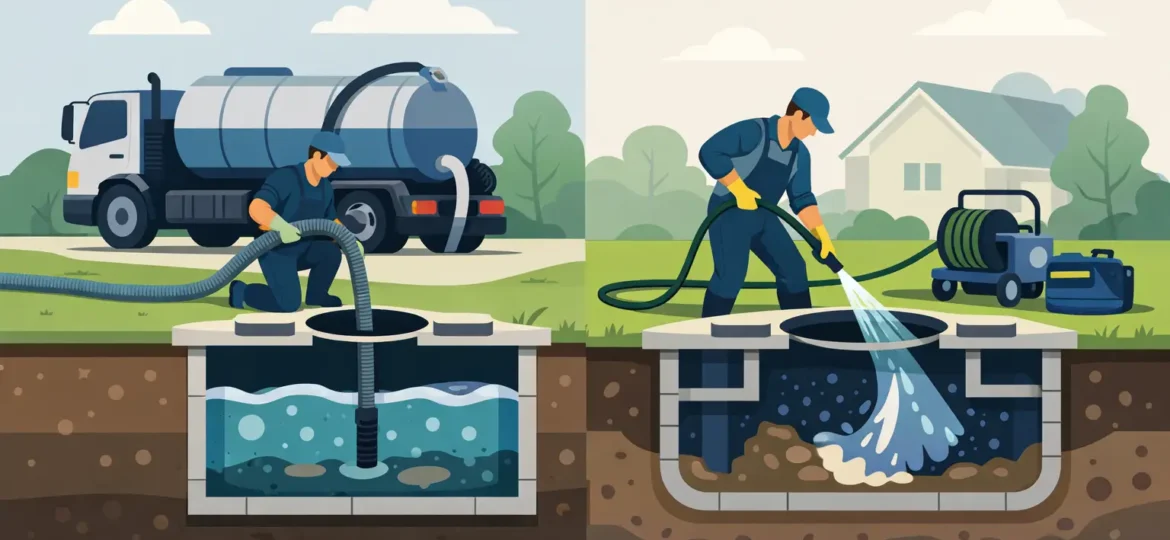
Septic pumping usually means removing the liquid, floating scum, and a large share of the sludge from the septic tank. It is the standard maintenance service most homes need on a schedule. A pump truck pulls waste out through the access opening, and the goal is to lower the tank contents before solids rise too high or move into the drain field.
Septic cleaning is often a more complete tank service. Depending on the company and the condition of the system, it can mean pumping the tank and then washing down the interior, breaking up stubborn sludge, removing compacted solids that did not come out easily, and checking for leftover buildup. In plain terms, pumping gets the tank emptied. Cleaning goes further when heavy waste, neglected maintenance, or problem conditions call for a deeper job.
That said, terminology can vary from one contractor to another. Some companies say “cleaning” when they really mean a routine pump-out. Others reserve the word for a more thorough service. That is why the smart move is to ask exactly what is included before the truck rolls out.
Why pumping is the routine service most systems need
For most residential septic systems, pumping is the maintenance work that keeps everything moving. Your tank is designed to separate wastewater into layers. Grease and lighter material float to the top, solids sink to the bottom, and partially clarified liquid flows out toward the drain field.
Over time, the sludge layer gets thicker. The scum layer can also build up. If those layers get too high, solids can leave the tank and head into the drain field. That is where expensive trouble starts. A drain field clogged with solids is not a quick fix.
Routine pumping removes that buildup before it gets to that point. For many homes, that means every 3 to 5 years. But “normal” depends on the size of the tank, how many people use it, whether there is a garbage disposal, and how hard the system gets pushed. A rental property with heavy use may need service sooner than a small household with careful water habits.
If your system has been maintained consistently, pumping is often all you need. It is faster, less invasive, and usually less expensive than a deeper cleaning.
When septic cleaning makes more sense
A neglected tank can be a different story. If the sludge has become dense and compacted, if the tank has not been serviced in years, or if there are signs of heavy buildup stuck to the walls and bottom, simple pumping may not remove everything that needs to come out.
That is where cleaning can matter. A more complete cleaning helps when solids are left behind after pumping, when there is hardened waste in the tank, or when a system inspection is needed after recurring problems. This can also be the better move if you bought a property and have no clear service history. Starting with a cleaner tank gives you a more honest picture of the system’s condition.
Cleaning is also useful in some commercial settings where grease, food waste, or heavy wastewater loads create more stubborn buildup than a typical household system. Restaurants, multi-unit properties, and high-use facilities sometimes need more than a routine pump-out to stay ahead of problems.
Signs you may need more than pumping
Not every septic problem means the tank needs a deep cleaning, but some symptoms should make you ask more questions. If backups keep happening not long after pumping, that can point to leftover solids, a downstream blockage, baffle damage, or drain field trouble. If the tank has a thick crust of buildup or a history of poor maintenance, cleaning may be the better call.
Strong odors around the tank area, soggy spots in the yard, toilets that gurgle, and multiple slow drains can all mean the septic system is under stress. Those signs do not automatically mean “clean the tank.” They mean the system needs a real diagnosis, not guessing.
That is the key difference many property owners miss. Pumping and cleaning are services. Neither one replaces proper troubleshooting.
Septic pumping vs septic cleaning for solving problems
If your only issue is that the tank is due for maintenance, pumping is usually enough. If the issue is heavy sludge, neglected service, or persistent waste left in the tank, cleaning may be worth the extra work. But if the real problem is a broken baffle, a crushed line, a failing grinder pump, or a saturated drain field, neither service by itself will fix it.
This is where experience matters. A good septic contractor does not just empty a tank and leave. They look at what came out, how the system is behaving, and whether there are signs of bigger trouble. Sometimes a customer calls asking for pumping, but what they really need is pumping plus repair. Other times they think the whole system is failing when it simply needs routine service.
A straight answer saves money. So does catching drain field trouble early, before it turns into a full replacement.
How often should a septic tank be pumped or cleaned?
Pumping follows a schedule. Cleaning follows condition.
Most homes should plan on septic pumping every few years, with timing based on tank size and household use. Larger families, homes with frequent guests, and properties that run a lot of laundry can fill a tank faster. Commercial properties often need a tighter schedule because wastewater volume is less predictable and often heavier.
Cleaning is not usually something you put on a fixed calendar unless your system has a known pattern of heavy buildup. It is more often recommended when a tank has been ignored, when solids are not coming out properly during pumping, or when the contents show signs of abnormal accumulation.
If you do not know your tank size, service history, or last pump date, do not wait for a backup to force the issue. A professional inspection can help set the right maintenance interval and avoid paying for more service than you need.
What pumping and cleaning will not do
A lot of frustration starts here. Property owners expect one service to solve everything, then get angry when symptoms come back. The truth is simple: septic pumping and septic cleaning remove waste from the tank. They do not repair broken components. They do not reverse a failed drain field. They do not fix root intrusion in sewer lines or a cracked tank lid.
They also do not cancel out bad habits. Flushing wipes, grease, paper towels, hygiene products, cat litter, or harsh chemicals into the system can create recurring trouble no matter how often the tank gets serviced. Too much water use in a short period can also overload the system, especially in older homes.
If a contractor promises that one pump-out will solve every septic issue on the property, be careful. Real septic work is not guesswork.
Which service should you ask for?
Start by describing the symptoms, not by insisting on a specific service. Tell the contractor whether you have backups, slow drains, odors, wet ground, or no known maintenance history. That gives them a better shot at recommending the right job.
If your system has been regularly maintained and is simply due, ask for septic pumping. If it has gone too long, has recurring issues, or you want the tank more thoroughly cleared out, ask whether septic cleaning is warranted. And if someone cannot explain what is included in plain language, keep looking.
A dependable company should be able to tell you what they are doing, why they are doing it, and what they found when the job is done. That matters just as much as the truck and hose.
For homeowners and property managers around Chattanooga, that straight-shooting approach is what keeps small tank issues from turning into full septic emergencies. The best service call is the one that fixes the actual problem, not the one that sells the biggest invoice.
When in doubt, think of pumping as regular maintenance and cleaning as a deeper service for tougher conditions. The right choice depends on what is in the tank, how the system has been treated, and whether there is a bigger issue waiting underneath. If your septic system is showing warning signs, getting eyes on it now beats dealing with sewage in the house later.