

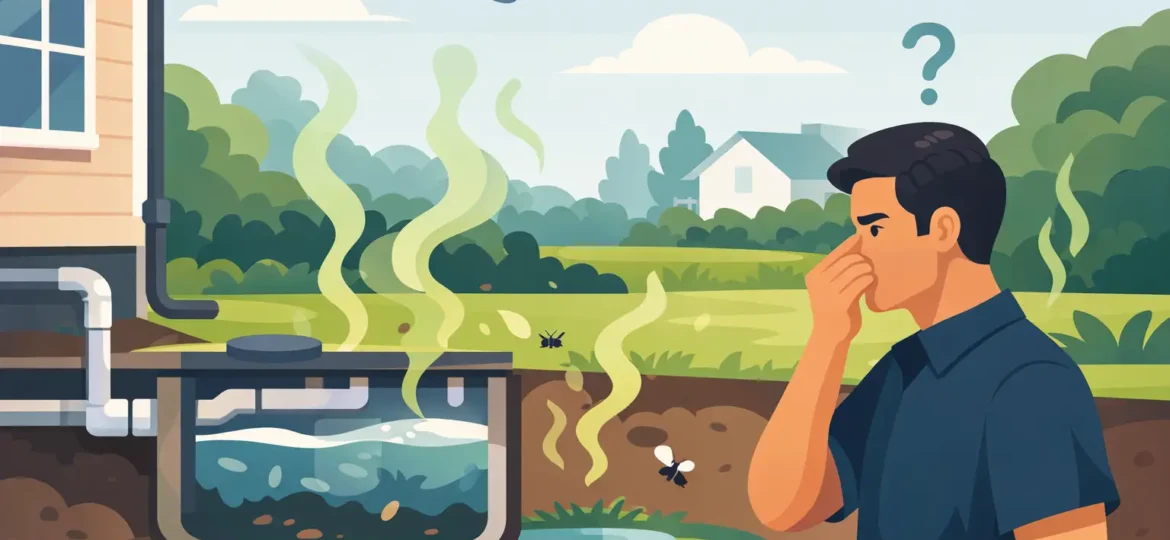
You walk outside, catch that rotten egg or sewage odor near the yard, and the question hits fast: why does septic smell outside? Most of the time, that smell means your system is trying to tell you something. It might be a simple venting issue, or it could be an early warning sign of a full tank, a failing drain field, or sewage not moving the way it should.
Outdoor septic odor is never something to ignore. A healthy septic system usually stays out of sight and out of smell. If you are noticing septic smell around the tank area, drain field, near the house, or close to exterior plumbing, there is usually a reason behind it – and the faster you catch it, the better your chances of avoiding a bigger repair.
Why does septic smell outside in the first place?
A septic system works by separating solids, moving wastewater, and allowing treated water to filter through the drain field. Gases are part of that process. Normally, those gases vent safely through the plumbing system and roof vents. When something is off, the smell can escape at ground level instead.
That does not always mean total system failure. It does mean something has changed. Sometimes the issue is weather-related. Sometimes it is maintenance. Sometimes it is a mechanical or structural problem that needs immediate attention.
Common reasons your septic smells outside
The septic tank is overdue for pumping
This is one of the most common causes. When a tank gets too full, solids can build up past normal levels and interfere with the flow of wastewater. That can force gases back through the system or allow sewage odors to escape near the tank lid, yard, or drain field.
If it has been several years since the last pump-out, that smell may be your warning. Waiting too long can lead to backups, drain field damage, and much more expensive work than routine pumping.
The drain field is overloaded
Your drain field is supposed to handle liquid effluent at a steady rate. If the soil is oversaturated from heavy rain, too much water use, poor drainage, or a failing field, wastewater may not absorb the way it should. When that happens, odors can rise from the yard.
This is especially common after storms or during long wet periods. But if the smell sticks around in dry weather too, that points more toward a drain field problem than a weather problem.
A vent pipe issue is pushing odor down low
Septic and sewer gases should vent through the plumbing vent stack on the roof. If that vent is blocked by leaves, debris, animal nests, or damage, the gases may not escape properly. Instead, they can collect or release closer to the ground where you actually smell them.
Wind direction can make this worse. Some homes only notice it at certain times of day or during certain weather patterns. That can make the problem seem random when it really is a venting issue.
The tank lid or riser is damaged or not sealed right
A cracked lid, loose riser, or bad seal around the tank opening can let odor escape directly into the yard. Sometimes this happens after age, shifting soil, or previous service work. Even a small gap can create a strong smell, especially in hot weather.
If the odor is strongest right over the tank area, the lid or riser is worth checking. This is not a part of the system you want to leave compromised.
There is a leak in the sewer line or septic line
If the pipe carrying wastewater from the house to the septic tank is cracked, offset, or broken, sewage odor may show up outside before you ever see a backup indoors. In some cases, the ground above the line may also stay soggy, greener than the surrounding grass, or sink slightly over time.
A damaged line can create both a smell problem and a health problem. If sewage is leaking into the soil near the home, it needs prompt attention.
Bacteria inside the tank are out of balance
Your septic system depends on bacteria to break down waste. Harsh chemical cleaners, bleach overuse, antibacterial products, paint, grease, and non-flushable items can disrupt that process. When the tank is not breaking down waste efficiently, stronger odors can follow.
This is usually not the only symptom, but it can contribute. If the smell started after heavy chemical use or poor flushing habits, that may be part of the story.
Where the smell is coming from matters
The location of the odor can tell you a lot.
If it smells strongest near the house, the issue may involve a sewer line, vent stack, or plumbing connection. If the smell is centered over the tank, think pumping needs, lid problems, or buildup inside the tank. If the odor hangs over a wide patch of yard, especially where the drain field sits, that raises concern about field saturation or failure.
This is why a real inspection matters. Septic odor is not one-size-fits-all. Two properties can smell bad for completely different reasons.
Weather can make septic smells worse
Hot, humid days often amplify odors. So can low air pressure, still air, and heavy rain. In East Tennessee, weather swings can make a borderline septic issue smell a lot stronger than usual.
That said, weather should only change how noticeable the odor is. It should not create a sewage smell out of nowhere in a healthy system. If the odor keeps returning, there is usually an underlying mechanical or maintenance issue behind it.
When septic odor means you need service fast
Some smells are annoying. Others are warning signs.
If septic smell outside comes with slow drains, gurgling toilets, wet spots in the yard, sewage backup, unusually green grass over the drain field, or standing water near the tank, do not wait. Those signs can point to a full tank, blocked line, or failing drain field. The longer you leave it alone, the greater the risk of property damage and more expensive repairs.
For commercial properties and rental units, the stakes are even higher. A septic problem that starts as an outdoor odor can quickly turn into tenant complaints, downtime, cleanup costs, and health concerns.
What you can do before calling a septic professional
Start with the basics. Think about when the tank was last pumped. Notice where the smell is strongest and whether it changes after rain or heavy water use. Watch for soft ground, lush patches of grass, or slow fixtures inside the building.
It also helps to cut back on water use until the system is checked. Space out laundry loads, avoid long showers, and do not run a lot of water-heavy appliances at once. If the drain field is struggling, reducing flow may keep the problem from getting worse short term.
Do not add miracle septic additives and hope for the best. Some products promise a quick fix but do nothing to solve a full tank, broken line, or failing drain field. Septic systems need the right diagnosis, not guesswork.
How a septic company diagnoses outdoor odor
A proper diagnosis usually starts with the system layout, the age of the tank, service history, and the location of the smell. From there, a technician may inspect the tank level, baffles, lid condition, risers, lines, and drain field performance. In some cases, camera inspection or further testing is needed to pinpoint a hidden line issue.
This is where experience matters. Outdoor septic odor can come from several places, and treating the wrong problem wastes time and money. A dependable local company like Chatta-Rooter Plumbing knows how to separate a simple pumping issue from a larger repair before the problem snowballs.
How to keep septic smell from coming back
The best prevention is steady maintenance. Pump the tank on schedule based on household size and usage. Be careful about what goes down your drains. Keep grease, wipes, paper towels, hygiene products, and harsh chemicals out of the system. Fix leaking toilets and dripping fixtures so the tank and drain field are not taking on extra water every day.
It also helps to protect the drain field itself. Do not park on it, build over it, or direct runoff into it. A drain field needs room to breathe and absorb water properly. Once that area gets compacted or overloaded, odor is often one of the first signs that trouble is building.
If your yard smells like septic, trust your nose. Septic systems rarely get better on their own, and the cheapest fix is usually the one you handle early.