

A sewer line usually stays out of sight and out of mind until the day it doesn’t. One slow drain turns into two. The toilet starts gurgling. You catch a sewage smell in the yard or the basement. This guide to sewer line problems is built for that moment – when you need straight answers, not guesswork.
Sewer line issues can go from annoying to expensive fast. The hard part is that the early signs often look small. Homeowners may think it is just a clogged sink, and commercial property owners may assume it is a heavy-use backup that will clear on its own. Sometimes that is true. A lot of times, it is not.
What sewer line problems usually look like
A main sewer line problem often shows up in more than one fixture at a time. If a toilet bubbles when a sink drains, or a tub backs up after you run the washing machine, that points to a bigger issue than a simple branch drain clog. One fixture acting up by itself is often local. Multiple fixtures acting up together usually means it is time to take the sewer line seriously.
Bad odors are another common warning sign. If you smell sewage inside or outside the building, something is wrong. It could be a cracked line, a blockage holding waste in the pipe, or a venting issue. The smell matters because it tells you wastewater is not moving the way it should.
Wet spots in the yard, unusually green patches of grass, sinkholes, or recurring backups after snaking are also red flags. None of these automatically means full line replacement, but they do mean the system needs a real inspection.
A practical guide to sewer line problems and causes
Most sewer line failures fall into a handful of categories. The cause matters because the right fix for one problem can be the wrong fix for another.
Grease, wipes, and heavy buildup
One of the most common causes is blockage from buildup inside the pipe. Grease, paper products, hygiene products labeled as flushable, and years of sludge can narrow the line until normal flow is no longer possible. This is especially common in older homes and commercial kitchens, but it can happen anywhere.
A cable machine may punch a hole through the clog and restore flow for the moment. That can be enough in some situations. But if the pipe walls are still coated with grease and debris, the problem often comes back. That is where a camera inspection and, in many cases, hydro jetting make more sense than repeated temporary clearing.
Tree root intrusion
Roots are a big one, especially in older neighborhoods with mature trees. Roots do not need a wide opening. They work their way into tiny cracks or loose joints, then keep growing. Over time they catch paper and waste, slow the line, and eventually create major blockage.
Root problems are tricky because clearing them is not always the same as solving them. If roots are removed but the pipe is cracked or offset, they will likely return. Some lines can be maintained. Others need repair or replacement. It depends on pipe condition, root size, and how often the issue has happened before.
Broken, collapsed, or offset pipe
Pipes can crack from age, shifting soil, corrosion, poor installation, or heavy loads above ground. In some cases the pipe partially collapses. In others, one section drops out of alignment and creates a ledge that catches waste. When that happens, backups become frequent and cleaning alone stops being a real fix.
This is where people lose money by guessing. If the line is structurally damaged, repeated drain cleaning calls can add up without actually solving anything.
Bellied sewer lines
A bellied line means part of the pipe has sunk and created a low spot where water and waste collect. This usually happens from soil movement or a bad install. Bellies can cause chronic slow drainage and recurring stoppages because solids settle in the sag instead of moving through the system.
Some bellies are minor and manageable for a while. Others are severe enough that excavation and replacement are the only durable option.
How professionals confirm the real problem
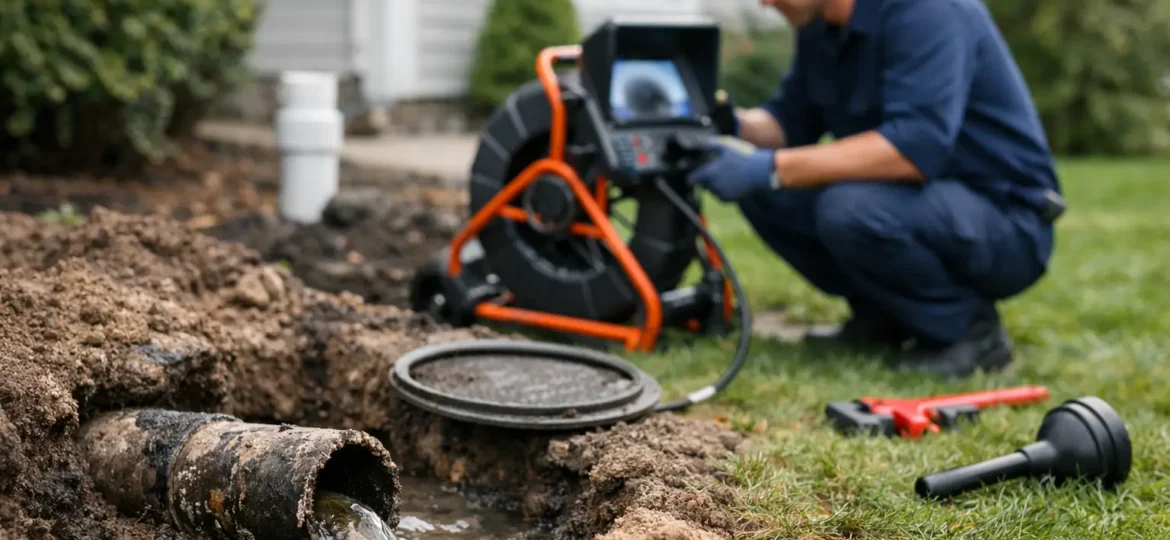
The best first step is not digging. It is seeing what is happening inside the line.
Sewer camera inspection
A camera inspection shows whether the issue is buildup, roots, a break, a sag, or something else. It takes the guesswork out of the job. That matters because the symptoms can overlap. Slow drains, odors, and backups can come from several different causes, and treating all of them like a basic clog wastes time and money.
For property owners, this is where a clear diagnosis saves frustration. You get a direct look at the line condition and a better idea of whether you need cleaning, spot repair, or replacement.
Drain cleaning and hydro jetting
If the issue is buildup, professional cleaning may restore the line without repair. Snaking can open the pipe and get things moving. Hydro jetting goes further by scouring the inside of the pipe with high-pressure water. It is often the better choice for grease, sludge, and recurring debris buildup.
That said, hydro jetting is not for every pipe. If the sewer line is fragile, badly cracked, or already collapsing, blasting it with pressure may not be the smartest move. This is why inspection comes first.
Repair options depend on the damage
Not every sewer problem means the whole yard gets dug up. But not every line can be saved with cleaning either.
Spot repairs
If one section of pipe is damaged and the rest is in good shape, a spot repair may be enough. This can make sense when there is a single crack, a localized root entry point, or a short collapsed section.
The upside is lower cost than full replacement. The downside is that if the rest of the line is old and failing, fixing one section may only buy time.
Full sewer line replacement
If the pipe has multiple failures, severe root intrusion, widespread corrosion, or repeated backups year after year, replacement is often the smarter long-term move. It costs more up front, but it can stop the cycle of temporary fixes and emergency calls.
For older properties, especially where cast iron or aging clay lines are involved, replacement is sometimes the most honest recommendation.
When to call fast instead of waiting
Some sewer line issues can wait a day or two for a scheduled visit. Others should not.
If sewage is backing up into tubs, showers, floor drains, or lower-level fixtures, call right away. If a business restroom is unusable, if wastewater is surfacing outdoors, or if multiple drains have stopped working at once, that is not the time to try store-bought chemicals and hope for the best.
Chemical drain cleaners are a gamble even on simple clogs. On a main sewer line problem, they usually do not fix the issue and can make the job harder or more dangerous later. If there is a damaged pipe involved, you want a real diagnosis, not more chemicals sitting in the line.
What property owners can do to prevent sewer trouble
Good habits help, but prevention is not one-size-fits-all. A newer home with PVC sewer pipe has different risks than an older property with clay or cast iron.
The basics still matter. Do not flush wipes, paper towels, hygiene products, or grease. Be careful about what goes down kitchen and commercial drains. If the property has had root problems before, periodic inspection makes sense. If backups tend to happen after heavy rain, the issue may involve inflow, infiltration, or an overloaded system that needs a closer look.
For homes and businesses in the Chattanooga area, older infrastructure, shifting ground, and mature trees can all play a role. That is one reason local experience matters. A contractor who sees these problems every week can usually spot patterns faster and recommend a fix that fits the property instead of pushing a one-answer-for-everything repair.
The cost question everyone asks
Sewer line work can range from a straightforward cleaning bill to a major excavation project. The price depends on access, pipe depth, line length, material, damage, and whether the issue is blockage or structural failure.
The cheapest option is not always the most affordable over time. If a line needs repair and only gets cleared, you may be paying for the same problem again in a month. On the other hand, if the line is solid and just badly clogged, a full replacement would be overkill. Honest diagnosis is what keeps this from turning into wasted money.
If you are dealing with recurring backups, sewage odor, wet spots in the yard, or drains that keep acting up together, do not wait for a complete failure to force the decision. A sewer line problem rarely fixes itself. Getting it checked early gives you more options, less mess, and a better chance to handle it before your home or building takes the hit.