

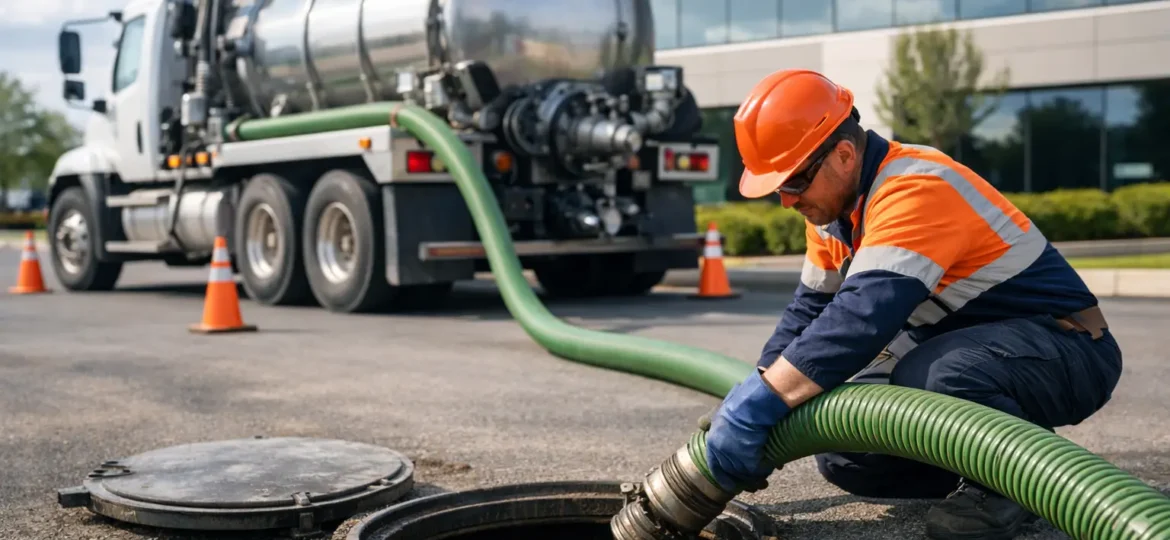
A septic problem at a business does not stay a septic problem for long. It turns into a customer complaint, a staff headache, a health issue, and lost time. This guide to commercial septic pumping is built for property owners, managers, and operators who need straight answers about when to pump, what affects the schedule, and how to avoid expensive shutdowns.
Why commercial septic pumping matters more than most owners think
Commercial systems take a different kind of beating than residential ones. A house might have steady use from the same few people every day. A restaurant, office, church, campground, warehouse, or retail site can swing from light use to heavy volume fast. That kind of load changes how solids build up in the tank and how hard the system has to work.
Pumping is not just about emptying a tank when it gets full. It is basic system maintenance that protects the drain field, reduces the chance of sewage backups, and helps catch problems before they get ugly. If solids move out of the tank and into the drain field, the repair bill can jump from routine maintenance to a major replacement project.
That is the part many owners miss. Skipping pumping rarely saves money. It usually delays the bill until the damage is worse.
A practical guide to commercial septic pumping schedules
There is no one-size-fits-all pumping interval for commercial properties. Anyone who gives you the same answer for every building is guessing. The right schedule depends on the tank size, the type of business, daily water use, grease load, occupancy changes, and the age and condition of the system.
A low-traffic office may go much longer between pump-outs than a busy restaurant or event venue. A church may have uneven usage with heavy weekend demand. A school or daycare can put intense strain on a system during operating hours. A campground or multi-tenant property may see seasonal spikes that fill a tank faster than expected.
For many commercial properties, pumping every few months to every one to three years is common, but that range is wide for a reason. A pumping schedule should come from actual system conditions, not guesswork. Tank inspections, usage history, and sludge levels matter more than rules of thumb.
If your business has changed in the last year, your pumping schedule may need to change too. Added staff, longer hours, new equipment, higher customer traffic, or a kitchen expansion can all shift the load enough to justify more frequent service.
Signs your commercial tank may need pumping sooner
Some septic systems give a little warning. Others go straight to a nasty surprise. Either way, there are a few signs that should not be ignored.
Slow drains across the building usually mean more than a simple clog, especially if toilets, floor drains, and sinks are all acting up at once. Bad odors around the tank, drain field, or inside the building are another warning sign. Wet ground, standing water, or unusually green grass over the drain field can point to trouble. Gurgling pipes, sewage backing up into drains, or alarms on related pump equipment all deserve immediate attention.
One more sign gets overlooked all the time – needing frequent drain cleaning without a clear cause. If the same property keeps having wastewater issues, the septic system may be part of the problem.
The trade-off here is simple. Calling for service early may mean a routine pump-out and inspection. Waiting can mean emergency pumping, cleanup, business interruption, and system repairs.
What happens during commercial septic pumping
A proper pumping visit is more than pulling up, opening the lid, and sucking out waste. The tank needs to be fully pumped so the contractor can see what is going on inside. Baffles, tees, tank walls, lids, and inlet and outlet conditions should be checked during service.
For commercial sites, the technician should also pay attention to what the waste stream says about the building. Heavy grease, wipes, paper overload, chemical misuse, or signs of pump trouble all matter. If a tank is filling with solids faster than expected, that is useful information. It may point to operational habits that need to change.
Some properties need pumping after-hours to avoid disrupting customers or operations. That is another reason commercial septic service should be handled by a company that is used to tough schedules and real-world business needs.
What affects the cost of commercial pumping
Commercial septic pumping costs vary, and the cheapest number is not always the best deal. Tank size is a major factor, but access also matters. A buried lid, difficult parking, traffic restrictions, multiple tanks, or a site that needs careful hose routing can all affect labor time.
The contents of the tank matter too. Grease-heavy waste from food service locations can change the difficulty of the job. If the system has been neglected, the service may take longer and may uncover repairs that have been building in the background.
Emergency calls usually cost more than scheduled maintenance. That is true in septic work just like any other service business. If a pump-out has to happen at night, during a backup, or while a business is down, the bill often reflects the urgency.
This is where upfront pricing matters. Commercial owners do not want a vague estimate and surprises later. They want to know what they are paying for and why.
How to make your commercial system last longer
Pumping is a big part of septic maintenance, but it is not the whole picture. What goes into the system matters every day.
Restaurants and food service operations need grease management. Offices and retail sites need clear rules about what can be flushed. Wipes, paper towels, feminine products, cleaning rags, and food waste do not belong in the system. Harsh chemicals can also disrupt the bacterial balance inside the tank, which affects how waste breaks down.
Water use matters just as much as waste. A commercial septic system can get overwhelmed by high-volume discharge, even if nothing unusual is being flushed. Running toilets, leaking faucets, overloaded laundry use, or poorly timed heavy water use can push too much flow into the system at once.
If your property has lift stations, grinder pumps, sewage ejector pumps, or other related components, those need attention too. A septic tank does not operate in a vacuum. One weak point in the wastewater system can create trouble somewhere else.
Choosing the right company for commercial septic pumping
Commercial septic work is not a side job. It takes the right equipment, experience, and the ability to spot problems before they turn into emergencies. A contractor should understand commercial usage patterns, know how to inspect while pumping, and be ready to explain what they found in plain English.
You also want a company that shows up when it says it will, especially if your business cannot afford downtime. Fast response matters. So does honest advice. If a tank needs pumping, you need the truth. If the real problem is a damaged baffle, drain field issue, pump failure, or line blockage, you need that truth too.
For business owners in and around Chattanooga, that local experience matters because soil conditions, property layouts, older systems, and county requirements can vary from site to site. A contractor who works these systems every day will usually spot patterns faster than somebody treating the job like a one-off service call.
When regular pumping is not enough
Sometimes the problem is not that the tank is overdue. Sometimes the system is undersized, damaged, or dealing with drain field failure. In those cases, pumping may give short-term relief without fixing the actual issue.
That is why a good commercial septic service call includes judgment, not just labor. If a business needs more than routine pumping, the owner should know before the next backup hits. That might mean tank repairs, line cleaning, pump service, drain field repair, or a larger conversation about system design and capacity.
A company like Chatta-Rooter Plumbing sees those situations in the field, where fast answers matter more than theory. For commercial operators, the goal is simple – keep the wastewater system dependable so the business can keep moving.
The best time to think about septic pumping is before your business gives you a reason to. A smart schedule, regular inspections, and quick action when warning signs show up will save money, protect your property, and keep a bad day from getting a whole lot worse.