

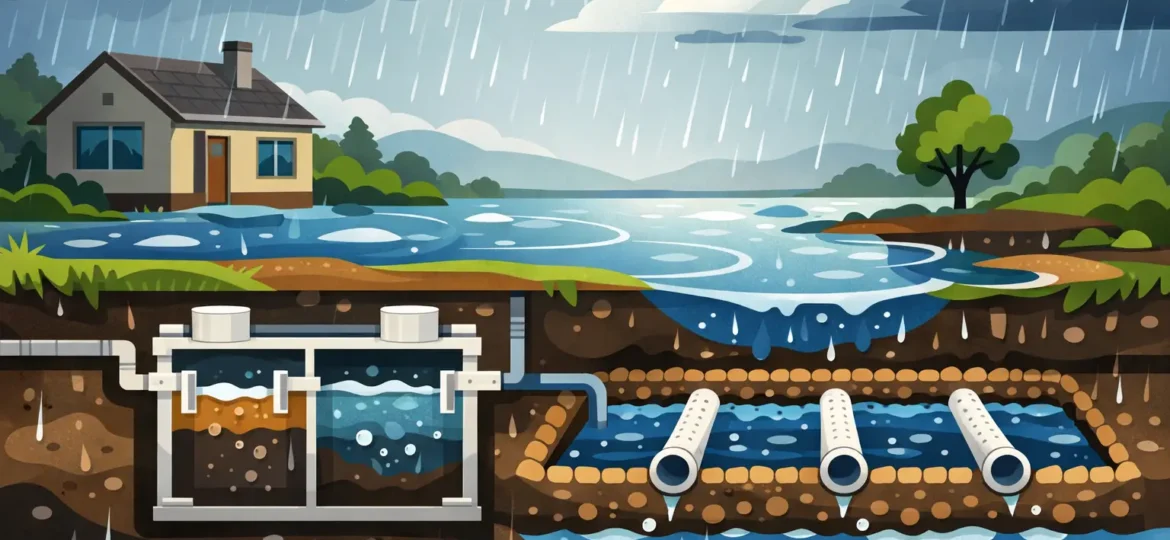
One hard Tennessee rain can turn a normal septic system into a mess fast. If you are asking, can heavy rain affect septic systems, the short answer is yes – and the trouble usually starts underground before you see it inside the house.
A septic system depends on balance. Wastewater flows from the home into the tank, solids settle, and treated water moves out to the drain field where soil finishes the job. When the ground gets overloaded with rainwater, that process slows down or stops. The system may not be broken, but it can act like it is.
Can heavy rain affect septic performance?
Absolutely. Heavy rain can saturate the soil around your drain field, and that matters more than most people realize. Your drain field needs enough open space in the soil to absorb and filter wastewater. When those spaces are already full of stormwater, septic effluent has nowhere to go.
That backup pressure can show up in different ways. Toilets may flush slow. Tubs and sinks may drain poorly. You might notice gurgling sounds, sewer odor, or wet ground near the tank or drain field. In more serious cases, wastewater can back up into the home.
This does not always mean the septic tank itself is full. A tank can be at a normal level and still struggle because the drain field is waterlogged. That is why rain-related septic problems can confuse property owners. What looks like a simple clog may actually be a saturated system.
Why rain causes septic problems
The main issue is groundwater. After a prolonged storm or a sudden downpour, the water table can rise enough to affect your septic tank, drain lines, and drain field. Septic systems are designed to work with normal soil moisture, not flooded soil.
When the drain field is soaked, wastewater cannot disperse properly. Instead of moving out and filtering through the soil, it lingers in the lines or pushes back toward the tank. If the tank level rises too high, wastewater has nowhere good to go.
There are also outside factors that make the problem worse. Roof runoff dumped near the drain field, poor yard grading, broken storm drains, compacted soil, and vehicles driving over the field can all reduce drainage. In some cases, older systems or undersized systems are already close to the edge, and a heavy rain just exposes the weakness.
Signs your septic system is struggling after rain
Rain-related septic issues usually follow a pattern. The system may work fine during dry weather, then start acting up after storms. That timing matters.
A few warning signs deserve attention. Slow drains throughout the house are a big one, especially if multiple fixtures are affected at once. Toilets that bubble or seem sluggish can point to pressure in the system. Standing water or unusually soft ground near the tank or drain field is another common sign. If sewage odor shows up in the yard or near drains, do not ignore it.
The most urgent sign is wastewater backing up into sinks, tubs, showers, or floor drains. At that point, the system is overloaded or blocked, and continuing to use water in the home will usually make it worse.
Can heavy rain affect septic tanks or just the drain field?
Usually the drain field takes the biggest hit, but the tank can be affected too. If the septic tank has damaged lids, bad seals, cracks, or loose risers, groundwater can infiltrate the tank during heavy rain. That extra water can throw off the system and reduce the tank’s effective capacity.
Flooding can also shift soil, expose lids, and stress old components. If a tank is overdue for pumping, the added strain from stormwater can push it into failure faster. The rain did not create the underlying problem, but it made it impossible to ignore.
This is where experience matters. A proper septic inspection can tell the difference between a temporary weather-related overload and a repair issue that needs to be fixed.
What to do if your septic acts up after a storm
First, cut back on water use right away. That means no laundry, no long showers, and no unnecessary dishwashing. Every gallon you send into the system adds pressure when the drain field is already saturated.
Next, keep people and pets away from any wet areas in the yard that may contain sewage. Wastewater exposure is a health issue, not just a plumbing problem.
Do not open the tank yourself, and do not assume additives will solve it. Septic additives are often oversold, and they will not dry out a flooded drain field. If the problem is active, you need a real diagnosis.
If you have sewage backing up inside, call for septic service as soon as possible. In Chattanooga and surrounding areas, this is common after heavy weather, and a fast response can prevent interior damage, contamination, and a much bigger cleanup.
When pumping helps and when it does not
People often ask whether pumping the tank will fix the problem after heavy rain. Sometimes it helps, but not always.
If the tank is overdue for service and already running high, pumping can create temporary relief and reduce the chance of sewage backing into the house. But if the drain field is saturated, pumping alone will not restore normal soil absorption. The system may improve for a short time, then struggle again until the ground dries out.
That is why septic service should not be guesswork. A professional needs to look at the tank level, the condition of the field, and whether there may be a blockage, damaged baffle, crushed line, or other repair issue involved.
How to reduce septic trouble during heavy rain
You cannot control the weather, but you can lower the risk.
Keep roof gutters, downspouts, and sump pump discharge away from the septic tank and drain field. Surface water should be directed away from the system, not toward it. If your yard holds water, grading improvements may help more than you think.
Stay current on septic pumping. A tank with too much sludge has less room to handle stress during wet weather. Avoid driving or parking over the drain field, because compacted soil drains poorly. Be careful with landscaping too. Deep roots and heavy structures can damage lines and reduce field performance.
It also helps to spread out household water use year-round. Running several large loads of water back to back can stress a system even in dry weather. During rainy periods, that extra strain can be enough to trigger a backup.
Some systems are more vulnerable than others
Not every property reacts the same way after a storm. Soil type matters. Clay-heavy soil drains slower than sandy soil. Older systems often have less margin for error. Properties with high groundwater or low-lying yards are naturally more exposed to wet-weather problems.
Commercial properties and rental homes can run into trouble faster simply because they generate more wastewater. A system that is technically working may still be undersized for current usage. Heavy rain tends to reveal those real-world limits.
That is why a recurring rainy-weather problem should not be brushed off as bad luck. If your septic system struggles every time it pours, there is likely an underlying drainage, capacity, or repair issue that needs attention.
When it is time to call a septic professional
If the problem clears after the ground dries, you may have avoided a major failure, but that does not mean you should ignore it. Repeated slow drains, yard saturation, or wet-weather backups are warning signs.
A good septic company will not just pump and leave. They should be able to inspect the system, explain what the rain is doing, and tell you whether the issue is maintenance, repair, drainage, or drain field failure. That kind of straight answer saves money and stress.
At Chatta-Rooter Plumbing, this is the kind of work we handle every day. When a storm hits and your septic system starts backing up, you need somebody who knows the difference between a temporary overload and a serious system problem.
Heavy rain does not always mean septic failure, but it does mean you should pay attention. If your system gets slow, soggy, or starts pushing sewage where it does not belong, the smart move is to act early before a wet yard turns into a backed-up house.